Bottom Line
- Lower cardiovascular disease risk: Level 1 — PREDIMED trial (Spain, 7,447 participants) showed a 31% reduction. Among the strongest evidence in modern nutrition.
- Lower all-cause mortality: Level 2 — U.S. cohort of 280K showed mortality drops with each 10 g/day increase
- Lower type 2 diabetes risk: Level 2 — Meta-analysis confirms
- Cancer risk: Level 3 — Observational signals, RCTs limited
- “Refined olive oil (pure) is equivalent to extra virgin”: Wrong — Benefits are confirmed only for extra virgin
Overall verdict: Extra-virgin olive oil (EVOO) is the strongest fat source supporting the Mediterranean diet. But quality varies wildly across the market and mislabeling and adulteration are well documented. “Any olive oil will do” is a misconception.
🫒 What Is Olive Oil?
Oil from the fruit of the olive tree. International Olive Council (IOC) standards classify it by acidity and processing:
| Grade | Acidity | Processing | Health Evidence |
|---|---|---|---|
| Extra Virgin (EVOO) | ≤0.8% | Mechanical pressing only | ★★★ (validated by PREDIMED, etc.) |
| Virgin Olive Oil | ≤2% | Mechanical pressing only | ★★ (intermediate) |
| Refined Olive Oil | ≤0.3% | Chemical refining | ★ (polyphenols nearly zero) |
| “Pure” Olive Oil | ≤1% | Refined + virgin blend | ★ (weak health effect) |
Key Players: Oleic Acid + Polyphenols
- Oleic acid (monounsaturated fat): ~70% of total, lowers LDL
- Hydroxytyrosol and oleuropein (polyphenols): antioxidants, abundant only in EVOO
- Oleocanthal: ibuprofen-like anti-inflammatory effect; cause of the throat-tingle in fresh oil
- Vitamin E and squalene: antioxidant, skin-protective
- Refined oil loses nearly all polyphenols
📊 Evidence #1: The PREDIMED Trial (The Level 1 Gold Standard)
- 7,447 high-cardiovascular-risk Spanish adults, 5-year follow-up
- Three arms compared:
- Mediterranean diet + 1 L/week of free EVOO
- Mediterranean diet + 30 g/day of nuts
- Low-fat control
- Result: EVOO group had 31% fewer major cardiovascular events (HR=0.69)
- NEJM-published; unprecedented size and quality for a nutrition RCT
- Re-analysis in 2018 confirmed the result
PREDIMED is the largest and most influential dietary intervention RCT ever conducted. Without it, “Mediterranean diet × EVOO” wouldn’t be the global gold standard.
📊 Evidence #2: Lower All-Cause Mortality (Level 2)
- U.S. Nurses’ Health Study + Health Professionals Follow-up Study (28-year follow-up, 92,383 participants)
- Per 10 g/day increase in EVOO:
- Cardiovascular mortality: 19% lower
- Cancer mortality: 17% lower
- Neurodegenerative disease mortality: 29% lower
- Respiratory disease mortality: 18% lower
- Replacing margarine, butter, or dairy fat with olive oil reduces mortality risk
📊 Evidence #3: Type 2 Diabetes and Metabolic Improvement (Level 2)
- PREDIMED reanalysis: 40% lower new-onset T2D in the EVOO group
- Mechanism: oleic acid improves insulin sensitivity; polyphenols suppress chronic inflammation
⚠️ “Pure” and “Light” Olive Oils Are Different Products
Most supermarket “olive oils” are actually refined oil blended with a small amount of virgin oil (“pure olive oil”). These have essentially no polyphenols, and the health evidence does not transfer from extra-virgin. “Light” and “mild” labels are similar.
A 2022 Spanish Mediterranean cohort showed only virgin-grade olive oils were associated with lower mortality.
🚨 Counterfeiting and Mislabeling
A serious global problem: products labeled “extra virgin” that don’t actually meet IOC standards are widespread. UC Davis (2010) found ~70% of imported EVOO failed IOC standards in the U.S. Similar concerns exist in Japan.
How to Identify Genuine EVOO
- Dark glass bottle: prevents light degradation; signals quality focus
- Harvest year, region, and mill specified
- Acidity stated (≤0.5% is preferable)
- Single country of origin (multi-country blends are suspect)
- Third-party certification: DOP (Italy), PDO (EU), IOC quality awards
- Taste: sharp, peppery, with bitterness (oleocanthal — sign of freshness)
🥗 Practical Guide
Recommended Intake
- 1–2 tablespoons per day (15–30 g)
- PREDIMED used ~50 g/day (4–5 tablespoons), but the realistic strategy is replacing other fat sources
How to Use
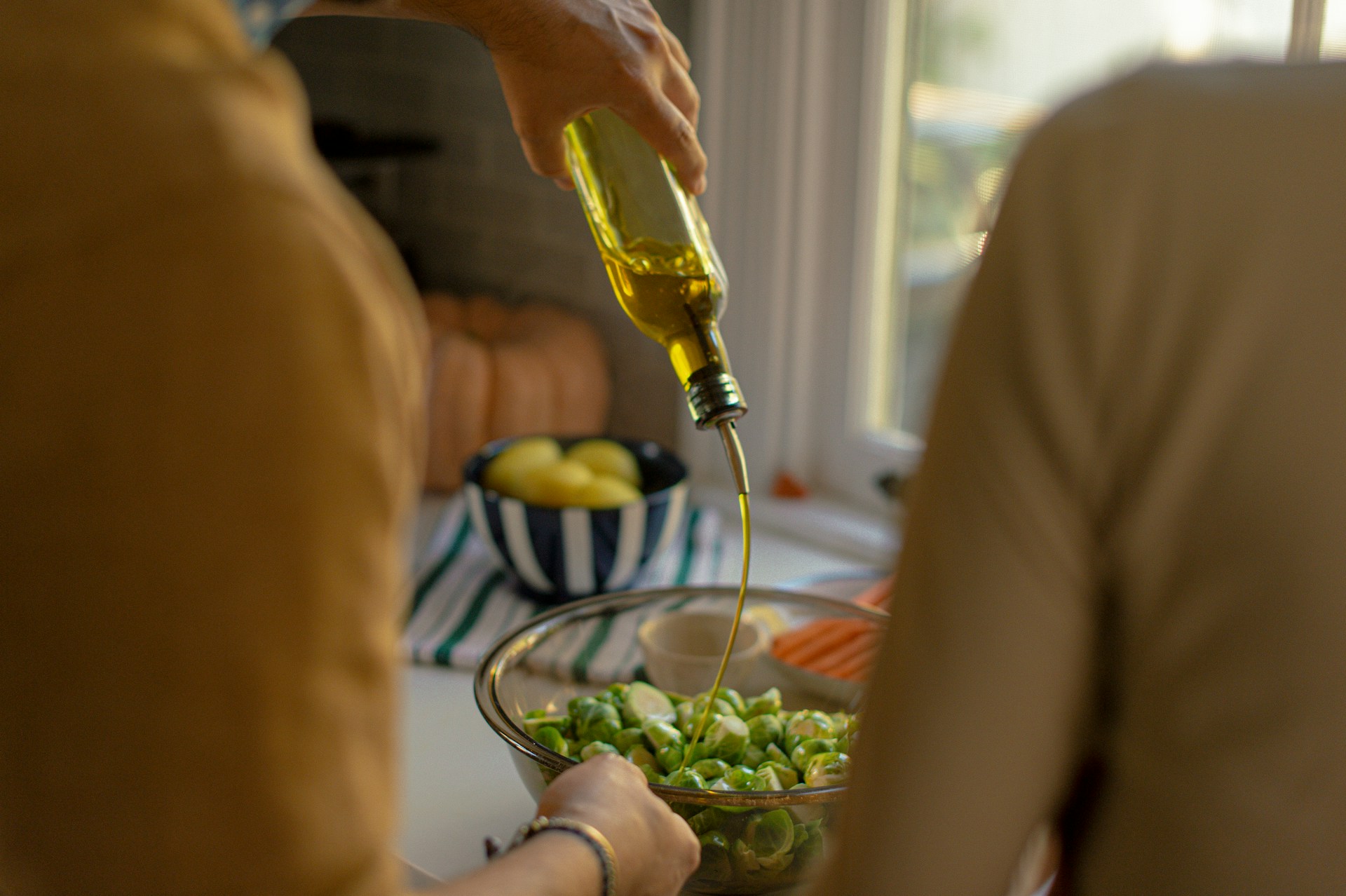
- Raw is best: drizzle on salads, bread, yogurt, tomato juice
- Heat to medium only: smoke point ~190–210°C (not for deep frying; OK for sautéing and low-temp baking)
- Heat reduces polyphenols but oleic acid is stable. “Don’t heat olive oil” is overstated
- Store dark and cool: use within 3 months of opening
- Replace vegetable oil and mayonnaise for the same effect as PREDIMED
Best Pairings
- EVOO + tomato: improves lycopene absorption (fat-soluble carotenoid)
- EVOO + leafy greens: improves β-carotene and lutein absorption
- EVOO + whole-grain bread: classic Mediterranean breakfast
- EVOO + avocado: double oleic acid intake
⚠️ Cautions
| Situation | What to Do |
|---|---|
| Calorie excess | 1 tbsp ~111 kcal; replace other fat sources, don’t add |
| Gallstones | Large doses may trigger attacks; consult physician |
| Counterfeit risk | Suspiciously cheap EVOO (under ¥1,000/L) is often suspected of adulteration |
| Post-opening degradation | Use within 3 months; discard if oxidized |
| Frying use | Even in Mediterranean kitchens, EVOO is not used for deep frying — cost and smoke point favor rice oil etc. |
🆚 Olive Oil vs. Other Fat Sources
| Oil | Main Fatty Acid | Polyphenols | Health Evidence |
|---|---|---|---|
| Extra-Virgin Olive Oil | Oleic acid (70%) | Abundant | ★★★ Level 1 (PREDIMED) |
| Pure Olive Oil | Oleic acid (70%) | Nearly none | ★ Limited effect |
| Canola Oil | Oleic acid (60%) + ω3 | None | ★★ Level 2 |
| Rice Bran Oil | Oleic acid (40%) | γ-oryzanol | ★★ Level 2-3 |
| Soybean Oil | Linoleic acid (50%) | None | ★ Watch overconsumption in processed foods |
| Butter | Saturated fat (50%) | None | Replace recommended |
| Coconut Oil | Saturated fat (90%) | None | ★ Health benefits exaggerated |
📚 Key References
- Estruch R et al. Primary Prevention of CVD with a Mediterranean Diet (PREDIMED). N Engl J Med. 2018;378:e34.
- Guasch-Ferré M et al. Olive oil intake and risk of CVD and mortality (PREDIMED). BMC Med. 2014;12:78.
- Guasch-Ferré M et al. Consumption of Olive Oil and Risk of Mortality. J Am Coll Cardiol. 2022;79:101-112.
- Donat-Vargas C et al. Only virgin type of olive oil consumption reduces mortality. Eur J Clin Nutr. 2023;77:226-234.
🔗 Related Articles
- The Mediterranean Diet — The Most Robustly Evidenced Eating Pattern
- Are Avocados Really Good for You? — Evidence Review
- Foods Deep Dive — A Tier A–D View of the Whole Food Landscape
⚠️ Disclaimer
This article is for general health information only. Those with gallbladder disease or being treated for dyslipidemia should consult a physician.
evidage Editorial Team / Hydrowing Lab Inc. / May 1, 2026