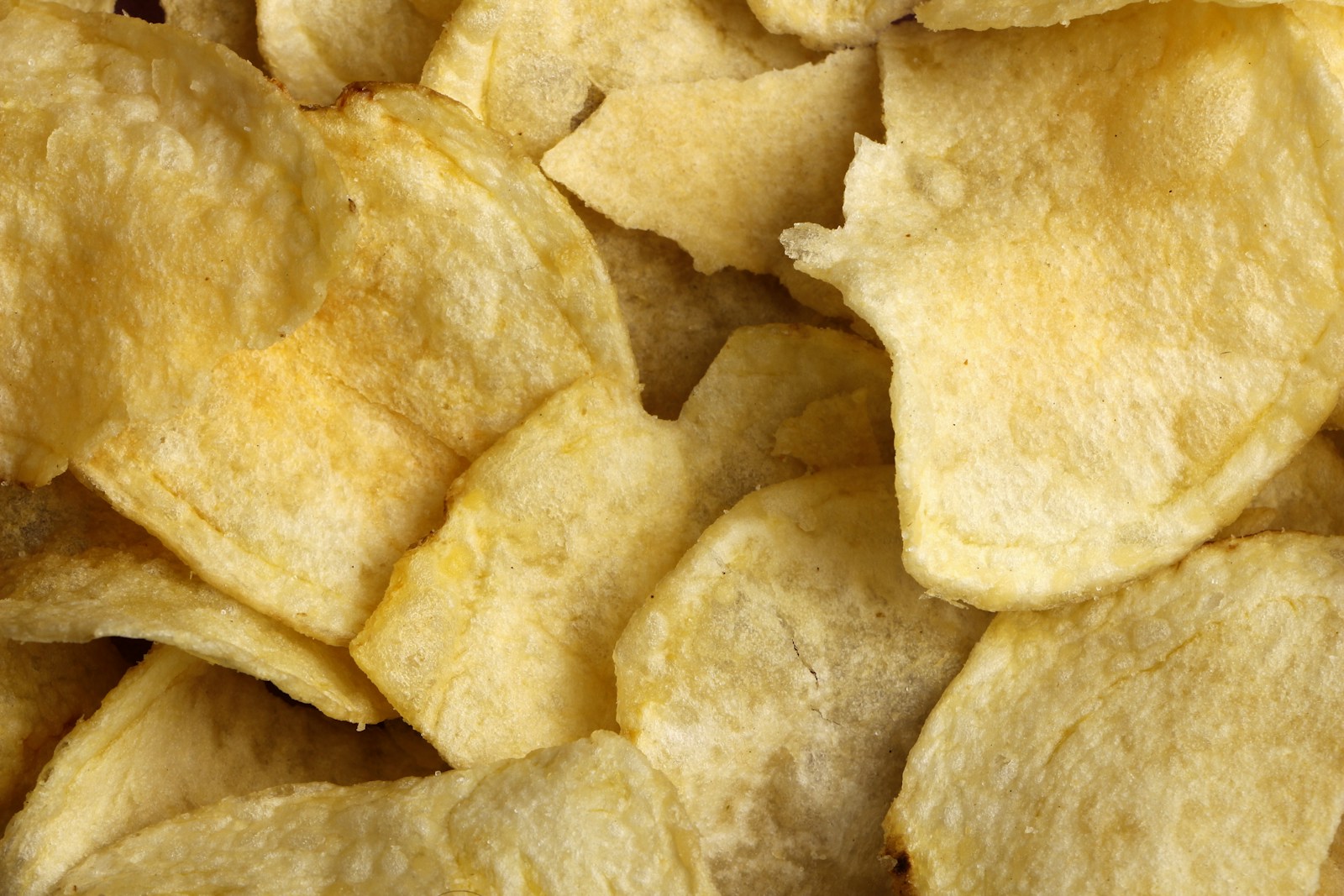
One-more-handful chips have a way of becoming “oh, the bag is empty.” Sodium, refined oils, acrylamide, the ultra-processed food story — several risk vectors stack here. We explain why and how often is realistic.
Conclusion: Potato chips are the "food most associated with weight gain in the Nurses' Health Study"—about 0.77 kg per serving over four years
[Level 1 (Strongest)] [Diet & Nutrition] [Strongly recommend limiting intake]
A Harvard study involving three cohorts totaling 120,000 people and a follow-up period of up to 20 years showed that potato chips contribute more to weight gain than any other food (approximately 0.77 kg per serving over four years). The combined effects of sodium, trans fats, acrylamide (IARC Group 2A), and refined carbohydrates have a detrimental impact.
📊 Effect Sizes and Key Studies
- Mozaffarian et al., NEJM 2011: 3 cohorts, 120,000 participants, 20-year follow-up. For every additional serving of potato chips per day, weight increased by +0.77 kg over 4 years (the highest among all foods); for french fries, +0.58 kg; and for sugar-sweetened beverages, +0.45 kg.
- Schwingshackl et al., Adv Nutr 2017: Meta-analysis of 47 cohorts. Consumption of ultra-processed foods (UPFs) was associated with a 25% increase in all-cause mortality and a 29% increase in cardiovascular disease mortality. Potato chips are a typical UPF.
- Tareke et al., J Agric Food Chem 2002: Found high concentrations (500–3000 μg/kg) of acrylamide (IARC Group 2A carcinogen) in potato chips and French fries.
- Cardoso et al., Alzheimers Dement DADM 2026: Reaffirmed an independent association between UPF intake and dementia risk (significant even after adjusting for the Mediterranean diet).
💡 The Bottom Line
1. High salt content: 500–1,000 mg of salt per 100 g → high blood pressure.
2. High-GI carbohydrates + fat: Rapid rise in blood sugar → insulin → fat accumulation, low satiety.
3. Acrylamide: Formed when amino acids (asparagine) react with sugars during heating at 120°C or higher. Neurotoxic and carcinogenic.
4. “Hyperpalatable” design: A combination of fat, salt, and umami that disrupts appetite control.
🎯 How to Start
"Not keeping it on hand" is the most effective approach:
- Don’t keep them at home. These are products designed so that if you buy them, you’ll end up eating them.
- Alternatives when you feel like snacking: unsalted roasted nuts, edamame, dried sardines, nori, fruit, and unsweetened yogurt.
- If you absolutely must eat them: Choose small bags (30g). Do not open large bags.
- Baked versions also contain acrylamide. While they’re slightly better in terms of salt and calories, they’re essentially the same.
⚠️ Cautions
1. “Non-fried” and “baked” foods are not healthy either: Issues with refined carbohydrates, salt, and acrylamide remain.
2. Habit formation in children: During the period when taste preferences are forming,
highly palatable foods can lead to a state where “natural foods don’t taste good.” 3. Age-related macular degeneration: Reports link it to UPF consumption (NIH 2022).
4. The “stress eating” cycle: Psychological dependence.
📝 Summary
- Potato chips are the single food item that contributes most to weight gain (Level 1)
- Contains acrylamide (IARC Group 2A)
- The most effective measure is to avoid keeping them in the house
- Replacing them with unsalted nuts, edamame, or fruit is a practical solution
📚 References
- Mozaffarian D, et al. N Engl J Med. 2011;364(25):2392-2404.
- Schwingshackl L, et al. Adv Nutr. 2017;8(6):793-803.
- Tareke E, et al. J Agric Food Chem. 2002;50(17):4998-5006.
- Cardoso BR, et al. Alzheimer's & Dementia: DADM. 2026;18:e70335.
⚠️ Disclaimer
- This page is based on peer-reviewed scientific research, but it is not a substitute for medical care
- Please consult a doctor or registered dietitian regarding individual health decisions.