You’ve probably heard “the burnt bits cause cancer.” The actual story involves heterocyclic amines (HCAs) and polycyclic aromatic hydrocarbons (PAHs). We give you the realistic risk picture and the cooking adjustments that meaningfully reduce it.
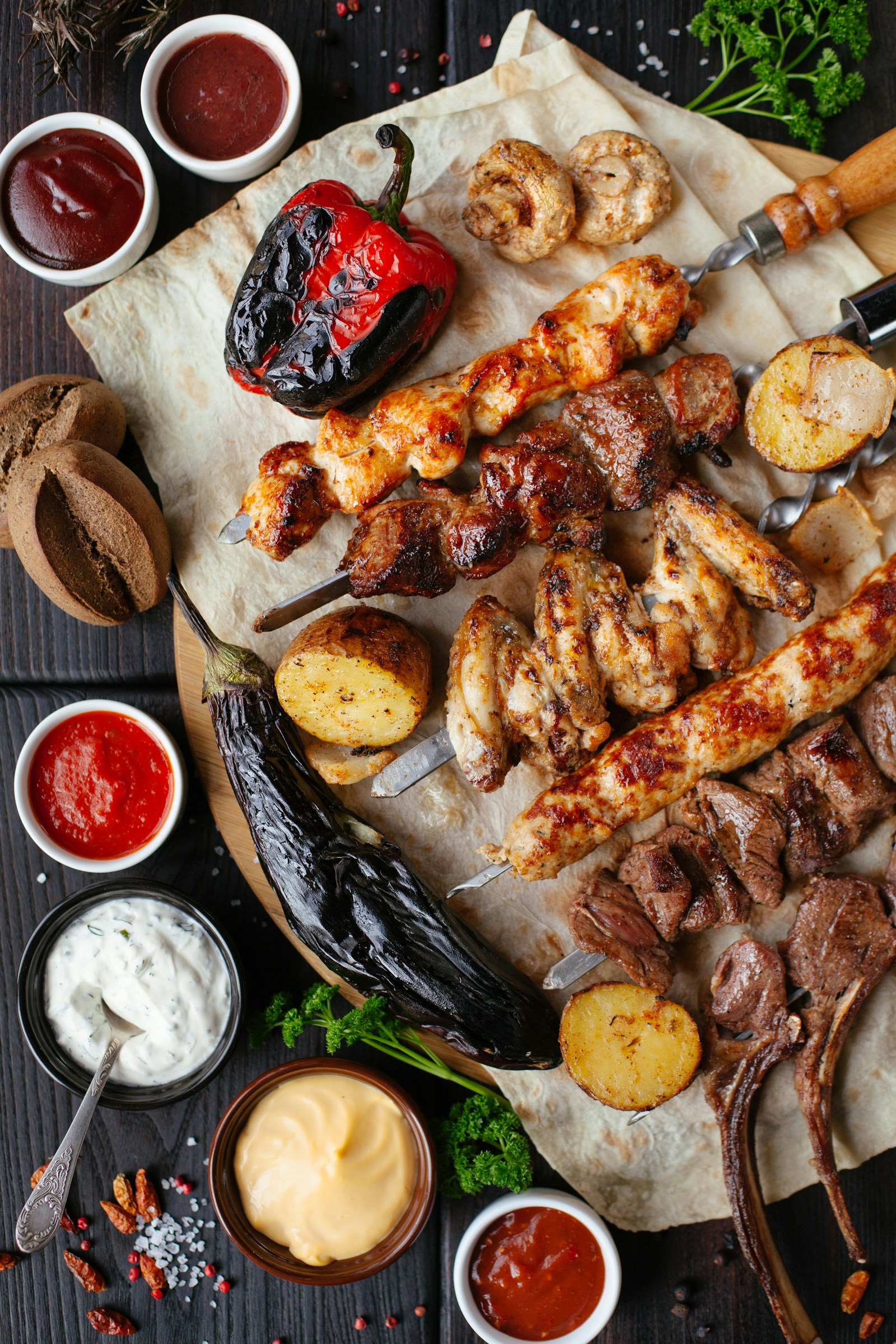
Conclusion: Charred parts of grilled meat and direct-flame grilling contain HCAs and PAHs (IARC Group 2A carcinogens)—these can be significantly reduced simply by changing how you cook the meat.
[Level 2 (Strong)] [Diet & Nutrition] [Recommend limiting intake]
Meat grilled at high temperatures, over direct heat, or for extended periods produces heterocyclic amines (HCAs) and polycyclic aromatic hydrocarbons (PAHs). These substances are classified as Group 2A (probably carcinogenic) by the IARC, and cohort studies have shown that they increase the risk of colorectal, prostate, and pancreatic cancers. Rather than reducing the amount consumed, changing how the meat is cooked is a more practical approach.
📊 Effect Sizes and Key Studies
- IARC Monograph Vol. 92 (2010): Classified HCA and PAH as “probably carcinogenic to humans (Group 2A).”
- Rohrmann et al., Br J Cancer 2013: EPIC cohort of 440,000 participants. Association between red meat and processed meat intake and mortality from colorectal cancer and cardiovascular disease. Varies depending on grilling method.
- Sinha et al., Cancer Res 2009: Prospective cohort of 5 million person-years. Dose-dependent relationship between HCA and PAH intake and prostate cancer risk.
- Anderson et al., Cancer Causes Control 2018: Meta-analysis of the association between pancreatic cancer and consumption of well-done meat. Consumption of “well-done” meat was associated with a 57% increase in pancreatic cancer risk.
💡 The Bottom Line
HCA (Heterocyclic Amines): Formed when creatine and amino acids in meat react at temperatures above 150°C. Found in high concentrations in charred surface areas.
PAH (Polycyclic Aromatic Hydrocarbons): Formed when fat drips onto an open flame and the resulting smoke adheres to the meat. Production peaks in barbecue smoke.
AGEs: Glycation products resulting from high-temperature cooking.
🎯 How to Start
You can significantly reduce HCAs and PAHs simply by changing how you cook:
- Marinate with beer, wine, vinegar, lemon, or yogurt: Reduces HCA formation by 50–90% (Smith 2008).
- Avoid direct flame: Use a griddle, grill pan, or oven. Ensure fat does not drip onto the flame.
- Cook at low temperatures: HCA formation drops dramatically below 150°C. Boiling, steaming, and braising are ideal.
- Do not eat charred parts: Discard blackened, charred skin.
- Roast with herbs and spices (rosemary, thyme) to neutralize HCAs with antioxidants.
- Cook with vegetables: Sulforaphane in broccoli and cabbage promotes HCA metabolism.
⚠️ Cautions
1. Barbecues pose a particularly high risk: the triple threat of direct flame, dripping fat, and smoke.
2. "Well-done" steak contains more carcinogens than medium-rare or less.
3. Grilling bacon and sausages carries a double risk due to the issues with processed meats and HCA/PAH. 4. Complete avoidance is unnecessary: barbecuing or grilling meat a few times a month is within acceptable limits. However, a daily habit of grilling meat—especially when it’s mostly well-done—needs to be adjusted.
📝 Summary
- HCA and PAH (IARC Group 2A) (Level 2) in charred parts of grilled meat
- It’s more practical to change how you cook rather than how much you eat
- Marinate, cook at low temperatures, avoid direct flame, and don’t eat the charred parts
- Eating with vegetables has a neutralizing effect
📚 References
- IARC Monograph Vol 92. 2010.
- Rohrmann S, et al. Br J Cancer. 2013;109(6):1593-1601.
- Sinha R, et al. Cancer Res. 2009;69(3):932-936.
- Anderson KE, et al. Cancer Causes Control. 2018;29(6):575-582.
⚠️ Disclaimer
- This page is based on peer-reviewed scientific research, but it is not a substitute for medical care
- Please consult a doctor or registered dietitian regarding individual health decisions.