Bottom Line
- Reduced cardiovascular disease risk: Level 2 — A large U.S. cohort (110,487 participants, up to 30 years of follow-up) found a 16% lower CVD risk and 21% lower CHD risk in those eating ≥2 servings/week.
- Improved LDL cholesterol: Level 1 — Multiple meta-analyses, including a GRADE-assessed one, show significant LDL reductions of −3.75 to −6.16 mg/dL.
- Lower systolic blood pressure: Level 2 — A meta-analysis showed a modest reduction of −1.15 mmHg.
- Sleep quality: Level 3 — A post-hoc HAT Trial analysis suggests improvement, but evidence is self-reported.
- Weight & blood glucose: Level 4 — The large HAT Trial RCT (n=1,008, 26 weeks) found no meaningful improvement in BMI or blood glucose.
Overall verdict: Multiple meta-analyses confirm that avocados improve LDL and reduce cardiovascular risk, but they do not deliver the dramatic benefits that “superfood” marketing implies. Including them in your daily diet as a high-quality fat source is a reasonable choice.
🥑 What Is an Avocado?
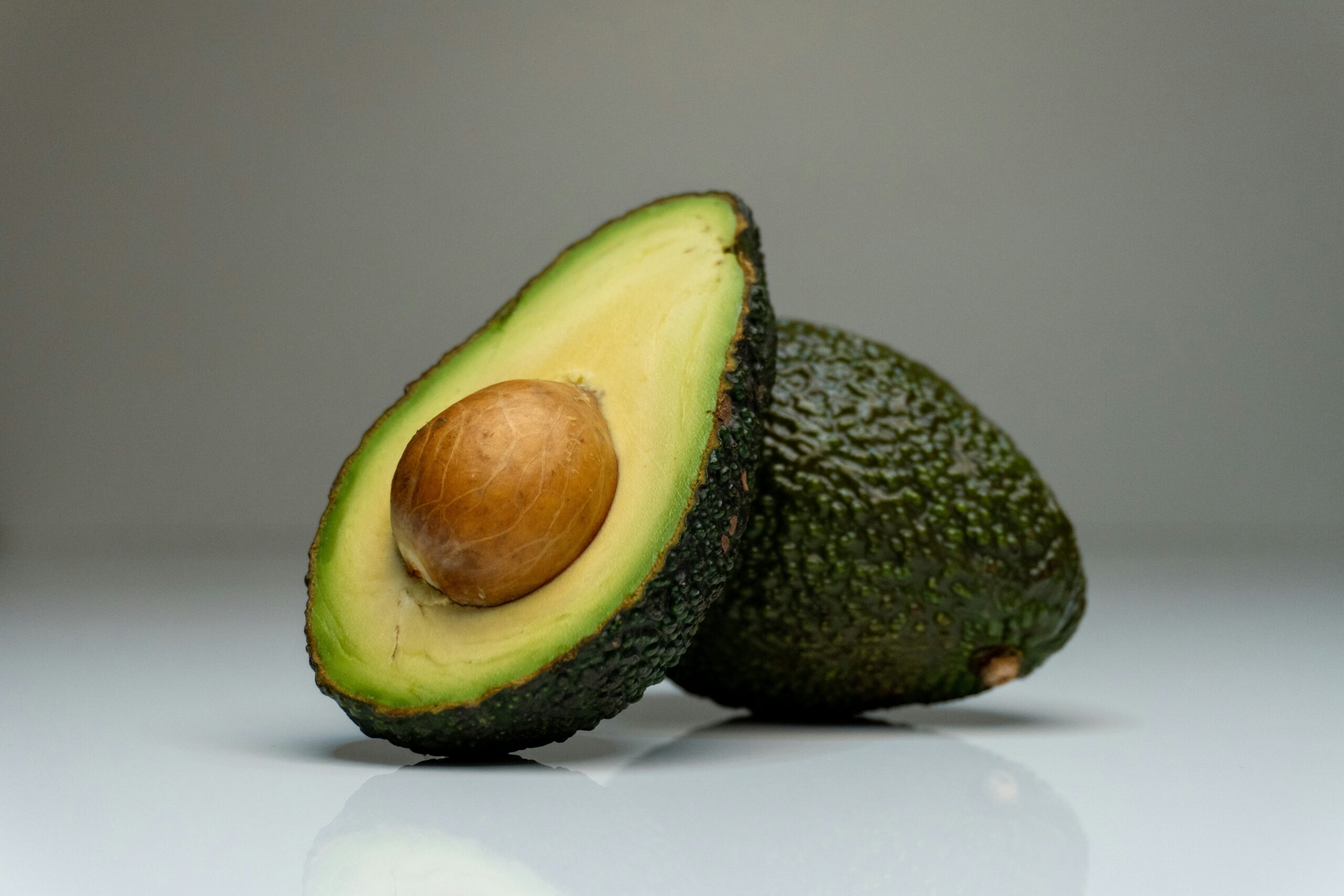
The avocado is the fruit of Persea americana, an evergreen tree in the Lauraceae family native to Central and South America. The Hass variety, primarily grown in Mexico, dominates global trade and accounts for almost all of Japan’s roughly 80,000 tons of annual imports.
Key Players: Monounsaturated Fat + Fiber + Potassium
- Oleic acid (monounsaturated fat): ~9.8 g per 100 g of edible portion — the same family of fats that anchors the Mediterranean diet.
- Dietary fiber: ~5.6 g per 100 g (1.7 g soluble, 3.9 g insoluble) — among the highest in any fruit or vegetable.
- Potassium: ~720 mg per 100 g (about double a banana) — supports healthy blood pressure.
- Lutein & zeaxanthin: Macular pigments that protect eye health.
- Magnesium, vitamin E, folate: Present in supportive amounts.
📊 Evidence #1: Cardiovascular Disease Prevention (Level 2)
Large U.S. Cohort Study (Pacheco et al., JAHA 2022)
- Sample: 110,487 participants from the Nurses’ Health Study and Health Professionals Follow-up Study, followed for up to 30 years.
- Findings for those eating ≥2 servings/week (~100 g) of avocado:
- Cardiovascular disease (CVD) risk: 16% lower
- Coronary heart disease (CHD) risk: 21% lower
- Replacing margarine, butter, eggs, or red meat with avocado was associated with a 16–22% reduction in cardiovascular risk.
HAT Trial (Habitual Diet and Avocado Trial, 2022–2024)
- Multicenter RCT across four U.S. sites, 1,008 participants, 26 weeks.
- Compared one avocado per day vs. fewer than two avocados per week.
- The primary endpoint (Life’s Essential 8 cardiovascular health score) did not improve overall.
- However, sub-component scores for blood lipids, sleep quality, and diet quality improved significantly.
- Vascular function measures (FMD, PWV) showed no change.
→ The takeaway: avocados don’t produce dramatic disease-prevention effects on their own, but the lipid-lowering mechanism does support a real, if modest, preventive benefit.
📊 Evidence #2: LDL Cholesterol Improvement (Level 1)
Hamednia et al., Food Science & Nutrition 2025 (GRADE-assessed meta-analysis)
- Pooled 10 RCTs.
- LDL cholesterol: −3.75 mg/dL (p<0.001).
- Systolic blood pressure: −1.15 mmHg (p=0.03).
- No significant changes in triglycerides, total cholesterol, HDL, fasting glucose, BMI, or CRP.
2024 Dose-Response Meta-Analysis
- Total cholesterol: −6.97 mg/dL.
- LDL cholesterol: −6.16 mg/dL.
- LDL reduction becomes pronounced at intakes of ≥250 g/day (about 1.5 avocados).
- Total cholesterol reduction becomes pronounced after ≥23 weeks of consistent intake.
Mechanism: Oleic acid activates LDL receptors, plant sterols (β-sitosterol) inhibit cholesterol absorption, and soluble fiber promotes bile acid excretion.
📊 Evidence #3: Improved Sleep Quality (Level 3)
- Post-hoc analysis of the HAT Trial (presented at AHA 2024).
- One avocado per day for 6 months was associated with improved self-reported sleep scores versus those eating fewer than two per month.
- Possible mechanisms: magnesium, tryptophan, and vitamin B6 content.
- Self-report only; objective measures (polysomnography, etc.) have not been used.
⚠️ Don’t Overrate Weight Loss or Blood Sugar Effects (Level 4)
Short-term studies have shown increased satiety and lower postprandial glucose with avocado, but the HAT Trial (n=1,008, 26 weeks) found no significant improvement in BMI or waist circumference. Claims of an “avocado diet” producing weight loss have weak scientific support.
At 187 kcal per 100 g (~230–250 kcal per fruit), avocados are calorie-dense. Without substituting them for other fat sources, regular consumption can promote weight gain.
🥗 Practical Guide
Recommended Intake
- Half to one avocado per day (70–140 g).
- Meta-analyses show clear effects at roughly 3–7 avocados per week.
How to Eat Them
- Raw is best: Vitamin E is fairly heat-stable, but enzymes and antioxidants degrade with cooking.
- Add lemon juice immediately after slicing to prevent polyphenol oxidase browning.
- The flesh near the skin is most nutrient-dense (highest in carotenoids and lutein) — don’t waste it.
- Use as a substitute for vegetable oils or mayonnaise to maximize the replacement benefit seen in research.
Recommended Pairings
- Avocado + tomato: Boosts lycopene absorption (a fat-soluble carotenoid).
- Avocado + salmon: Combines omega-3 and omega-9 fatty acids.
- Avocado + broccoli sprouts: Pairs unsaturated fats with sulforaphane.
- Avocado + whole-grain toast: A classic Mediterranean breakfast pattern.
⚠️ Cautions
| Situation | What to Do |
|---|---|
| Taking warfarin | Avocados contain vitamin K — keep intake consistent and consult your doctor. |
| Latex allergy | Latex-fruit syndrome can cause cross-reactivity with avocado. |
| Doctor advised limiting fat intake | Follow your physician’s or dietitian’s specific guidance. |
| Managing weight | Cap at one per day and use as a substitute for other fat sources. |
| Kidney disease requiring potassium restriction | Avocados are high in potassium — consult your doctor. |
🆚 Comparison with Other High-Quality Fat Sources
| Food | kcal / 100 g | Main Fatty Acid | Fiber | Notable Trait |
|---|---|---|---|---|
| Avocado | 187 | Oleic acid | 5.6 g | Provides fiber and potassium together |
| Extra-virgin olive oil | 884 | Oleic acid | 0 g | Mediterranean-diet staple, suited for cooking |
| Walnuts | 654 | α-linolenic acid (ω-3) | 7.5 g | Standout omega-3 source |
| Almonds | 608 | Oleic acid | 10.1 g | Rich in vitamin E |
| Salmon (raw) | 138 | EPA, DHA | 0 g | Animal-source omega-3 |
→ The avocado’s distinctive strength is delivering quality fat, fiber, and micronutrients in a single ingredient. Few other foods cover this many bases at once.
🌍 A Note on Sustainability
- About 30% of global production is concentrated in Mexico, creating geopolitical concentration risk.
- Producing one avocado requires roughly 320 liters of water, comparable to rice.
- Deforestation and cartel involvement raise serious ethical concerns.
- “Healthy, so eat as much as you want” is not the right framing — moderate consumption is preferable.
📚 Key References
- Pacheco LS et al. Avocado Consumption and Risk of Cardiovascular Disease in US Adults. J Am Heart Assoc. 2022;11:e024014.
- HAT Trial (Wang et al). Effect of Daily Avocado Intake on Cardiovascular Health. J Am Heart Assoc. 2024.
- Hamednia S et al. Effects of Avocado Products on Cardiovascular Risk Factors: A GRADE-Assessed Systematic Review and Meta-Analysis. Food Science & Nutrition. 2025;13:e70547.
- Exploring the effect of avocado on lipid profile modulation: a systematic review and dose-response meta-analysis. PubMed. 2024.
🔗 Related Articles
- The Mediterranean Diet — The Most Robustly Evidenced Eating Pattern
- Are Broccoli Sprouts Really Good for You? — Evidence Review
- Foods Deep Dive — A Tier A–D View of the Whole Food Landscape
⚠️ Disclaimer
This article is for general health information only. If you are being treated for a medical condition or taking medication, please consult your physician.
evidage Editorial Team / Hydrowing Lab Inc. / May 1, 2026