Bottom Line
- Lower cardiovascular disease risk (eating fish): Level 1 — JELIS trial (18,645 Japanese) and others. 2+ servings/week reduces coronary disease risk
- Lower triglycerides: Level 1 — Meta-analysis: 20–30% reduction, dose-dependent
- EPA supplements (high-risk groups): Level 2 — REDUCE-IT showed 25% MACE reduction with EPA monotherapy; EPA+DHA combined less clear
- Dementia prevention: Level 2–3 — Observational link; RCTs mixed
- Atrial fibrillation risk (supplements): Level 2 — Slight increase; long-term supplementation requires caution
Overall verdict: Eating oily fish is strongly recommended. EPA/DHA supplements are not for everyone — benefits outweigh risks only in specific conditions like high triglycerides or established cardiovascular disease. Healthy people pursuing health gains via supplements have weak evidence support.
🐟 What Are Oily Fish?
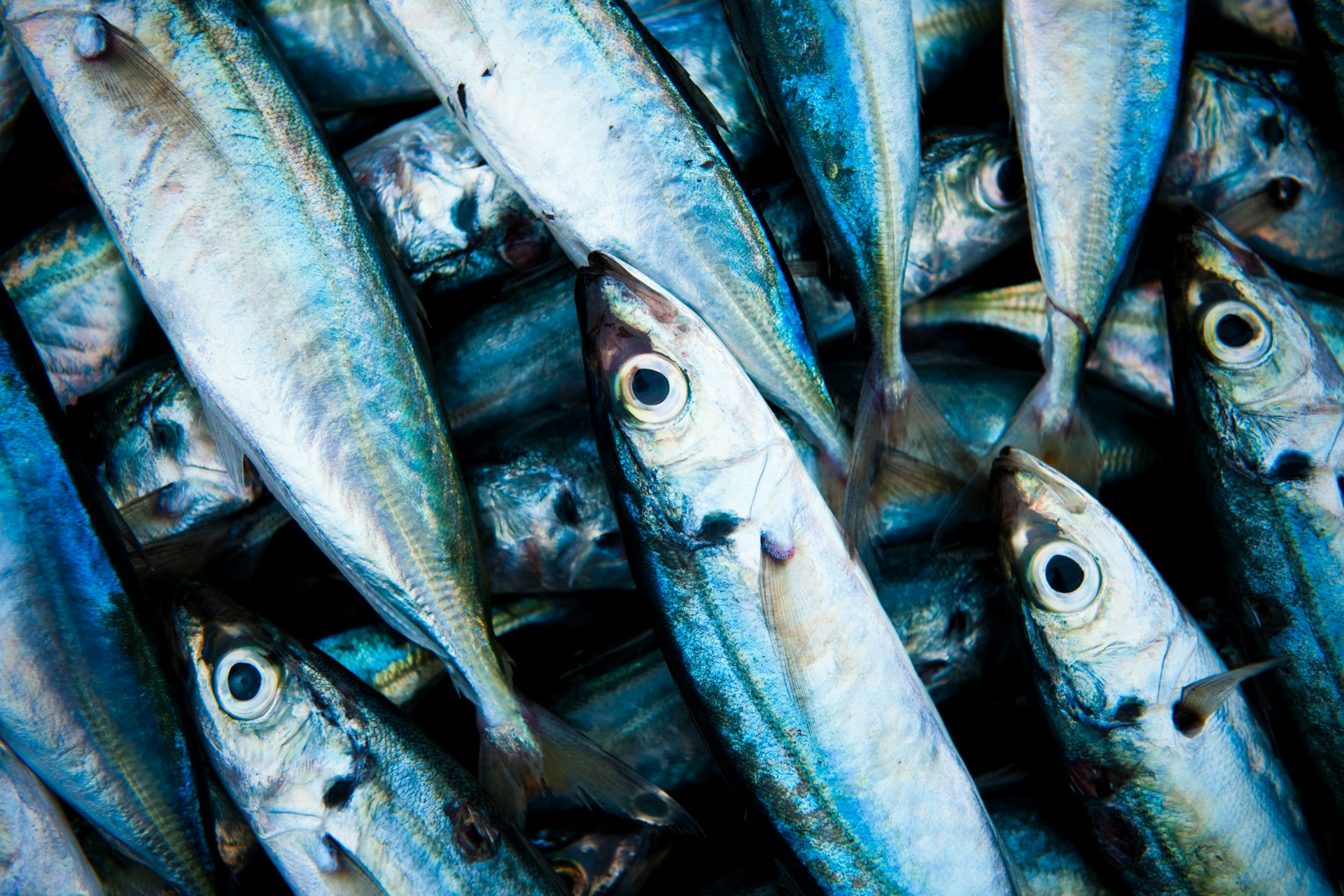
Fish with darker, oilier flesh (“blue-backed fish” in Japanese cuisine): mackerel, sardines, Pacific saury, jack mackerel, yellowtail, bonito, tuna. Common feature: high in n-3 (omega-3) polyunsaturated fatty acids (EPA and DHA). Cold-water species tend to have higher concentrations.
Key Players: EPA, DHA, Protein, Vitamin D
- EPA (eicosapentaenoic acid): anti-inflammatory, anti-platelet, triglyceride-lowering
- DHA (docosahexaenoic acid): brain and retinal structural component, neural function
- Protein: ~20 g/100 g, highly bioavailable
- Vitamin D: deficient in many Japanese diets
- Vitamin B12, selenium: present in supportive amounts
EPA/DHA Content of Major Oily Fish (per 100 g)
| Fish | EPA (mg) | DHA (mg) | Notes |
|---|---|---|---|
| Mackerel (raw) | 690 | 970 | Concentrated further in canned |
| Sardines (raw) | 780 | 870 | Bone-in adds calcium |
| Pacific saury (raw) | 890 | 1,700 | Top-tier DHA content |
| Jack mackerel (raw) | 300 | 570 | Mild flavor, easy entry |
| Yellowtail (raw) | 940 | 1,700 | Farmed has more fat |
| Salmon (raw) | 240 | 510 | Not technically blue-fish but a good substitute |
📊 Evidence #1: Cardiovascular Disease Prevention (Level 1)
JELIS Trial (Historic Japanese RCT)
- 18,645 Japanese with hypercholesterolemia, 5-year follow-up
- Statin alone vs. statin + EPA 1.8 g/day
- Result: 19% reduction in major coronary events (HR=0.81)
- Particularly strong effect in high-triglyceride subgroup
- Influenced global cardiology guidelines — Japan-originated evidence
REDUCE-IT Trial (High-Purity EPA)
- 8,179 high-cardiovascular-risk patients
- Placebo vs. high-purity EPA 4 g/day
- Result: 25% reduction in major adverse cardiovascular events
VITAL Trial (Healthy Adults)
- 25,871 healthy adults aged 50+
- Placebo vs. omega-3 (EPA+DHA) 1 g/day
- Result: no significant difference in overall CV events; myocardial infarction reduced by 28%
- Suggests “supplements for healthy adults” have limited prevention effect
2025 Meta-Analysis (42 studies, 176,253 participants)
- EPA monotherapy: significant reductions in CV mortality, MACE, MI, CHD
- EPA+DHA combined: effect unclear
- Side effects: increased atrial fibrillation, GI symptoms
📊 Evidence #2: Triglyceride Reduction (Level 1)
- EPA/DHA 2–4 g/day: 20–30% reduction in triglycerides
- Clear dose-dependence; mechanism: hepatic VLDL synthesis suppression
- Prescription medications “Epadel” and “Lotriga” are the same EPA in pharmaceutical-grade purity
📊 Evidence #3: Dementia and Brain Function (Level 2–3)
- Observational studies: weekly fish consumption lowers dementia risk (multiple prospective cohorts)
- Rotterdam Study: higher DHA blood levels → lower dementia risk
- RCTs are mixed: limited effect for those already showing cognitive decline
- Current understanding: preventive but not therapeutic
⚠️ “Eating Fish” and “Taking EPA Supplements” Are Not Equivalent
The mackerel-can boom in Japan has caused some confusion: the effect of eating fish and the effect of EPA supplements are not the same.
- Fish contains EPA/DHA plus protein, vitamin D, minerals, taurine
- The benefit of fish consumption includes the broader dietary pattern (replacing red meat, margarine)
- EPA/DHA supplements deliver only the isolated nutrient; long-term use is associated with slightly elevated atrial fibrillation risk
- No such atrial fibrillation signal exists for fish consumption
→ For healthy people, eating fish is the first choice. Supplements are for medical indications such as high triglycerides or elevated cardiovascular risk.
🥗 Practical Guide
Recommended Intake
- 2–3 servings per week, 80–100 g each (Japan MHLW and American Heart Association)
- EPA+DHA total: 250–500 mg/day equivalent
- JELIS used 1.8 g/day, but for healthy people the recommended baseline is sufficient
Cooking Tips (Preserving EPA/DHA)
- Sashimi has minimal loss (essentially zero fat loss)
- Canned (water-packed): pre-cooked, includes the broth — excellent and convenient
- Grilled or simmered: ~20% EPA/DHA loss; deep-fried up to 50% loss
- Foil-baking and steaming: minimize fat loss
- Canned broth contains EPA/DHA — use the liquid, don’t discard
⚠️ Cautions
| Situation | What to Do |
|---|---|
| On anticoagulants (warfarin etc.) | EPA’s anti-platelet effect may increase bleeding risk; consult MD before supplements |
| Fish or shellfish allergy | Avoid; consider flaxseed/perilla oil for ALA (low conversion efficiency) |
| Pregnancy / breastfeeding | Limit large mercury-containing fish (bluefin tuna, swordfish) per Japan MHLW guidance; oily fish recommended |
| Gout | Sardines and saury are high in purines; avoid during attacks |
| Long-term EPA supplements | Possible AF risk; don’t take chronically without indication |
🆚 Fish vs. EPA/DHA Supplements
| Item | Eating fish | EPA/DHA supplements |
|---|---|---|
| Beyond EPA/DHA | Protein, vitamin D, minerals, taurine | EPA/DHA only |
| CV prevention evidence | Level 1 (observational + RCT) | Level 2 (high-risk only) |
| Atrial fibrillation risk | No increase | Slight increase |
| Cost | Variable; canned from ~¥100 | Several thousand yen/month |
| Purity control | Variable by source | Standardized |
| Eating enjoyment | Yes | No |
📚 Key References
- Yokoyama M et al. JELIS Trial. Lancet. 2007;369:1090-1098.
- Bhatt DL et al. Cardiovascular Risk Reduction with Icosapent Ethyl (REDUCE-IT). N Engl J Med. 2019;380:11-22.
- Manson JE et al. Marine n-3 Fatty Acids and Prevention of CVD/Cancer (VITAL). N Engl J Med. 2019;380:23-32.
- Hu Y et al. Marine Omega-3 Supplementation and CVD: Updated Meta-Analysis. J Am Heart Assoc. 2019;8:e013543.
🔗 Related Articles
- The Mediterranean Diet — The Most Robustly Evidenced Eating Pattern
- Are Avocados Really Good for You? — Evidence Review
- Foods Deep Dive — A Tier A–D View of the Whole Food Landscape
⚠️ Disclaimer
This article is for general health information only. EPA supplements are pharmacologically equivalent to prescription drugs (e.g., Epadel) — those already on medication or with cardiovascular history must consult their physician. Pregnant women: refer to Japan MHLW guidelines on fish consumption.
evidage Editorial Team / Hydrowing Lab Inc. / May 1, 2026