Bottom Line
- Lower breast cancer risk (from soy foods): Level 1–2 — Japanese, Chinese, and Korean meta-analyses show prevention in both pre- and post-menopausal women, particularly strong in Asian populations
- Improved menopausal symptoms (hot flashes, etc.): Level 2 — Meta-analysis confirms; strong individual variation depending on equol-producing gut bacteria
- Osteoporosis prevention: Level 2 — Bone density preservation, especially pronounced in equol producers
- Lower cardiovascular disease risk: Level 2 — LDL reduction; meta-analysis confirms
- Lower type 2 diabetes risk: Level 2–3 — Observational link
- “Isoflavone supplements equal soy foods”: Level 4 — High-dose supplements raise safety concerns; not recommended
Overall verdict: Daily consumption of soy foods (tofu, natto, miso, soy milk) is strongly supported by science, especially for women. High-dose isoflavone supplements should be considered separately — the breast cancer prevention evidence is for “soy foods” specifically.
🫘 What Are Soy Products?
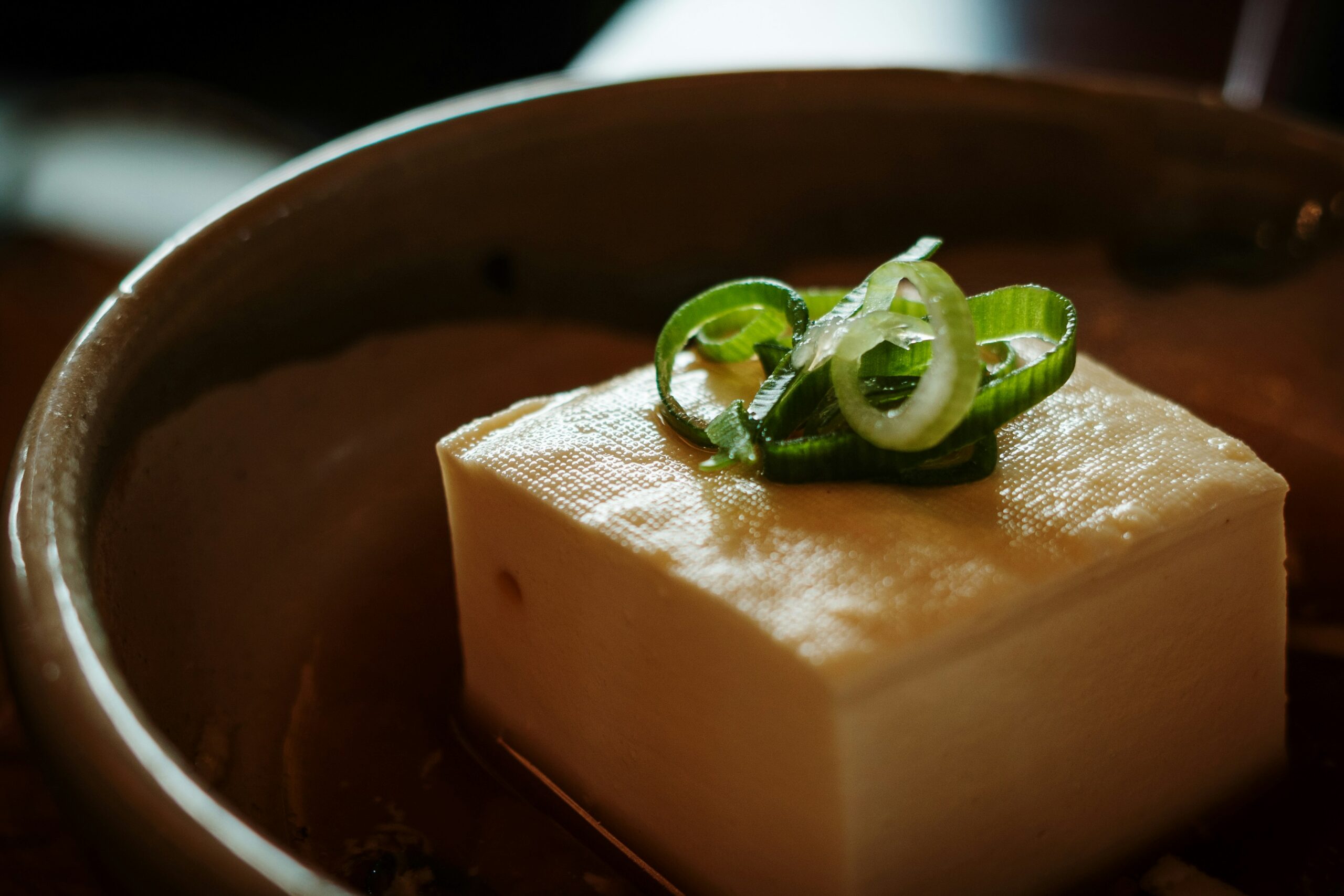
Foods made from soybeans (Glycine max). The core of Japanese cuisine: tofu, natto, miso, soy sauce, soy milk, okara, yuba, kinako, abura-age, tempeh. Fermented (natto, miso) and non-fermented (tofu, soy milk) categories have different nutritional profiles.
Key Players: Isoflavones + Soy Protein + Fiber
- Soy isoflavones: daidzein, genistein, glycitein — three phytoestrogens with estrogen-like activity
- Equol: a metabolite produced from daidzein by gut bacteria, with stronger biological activity. Only 50–60% of Japanese can produce it; only 20–30% of Westerners
- Soy protein: complete amino acid score of 100, the highest-quality plant protein
- Dietary fiber: ~7 g per 100 g (boiled soybeans), good soluble/insoluble balance
- Lecithin: lipid metabolism, choline source
- Saponins and phytic acid: antioxidant, but excess may interfere with mineral absorption
📊 Evidence #1: Breast Cancer Prevention (Level 1–2)
- Shanghai Women’s Health Study and U.S. cohort follow-up: 32% lower breast cancer recurrence risk with 10+ g/day of soy protein
- 2022 meta-analysis: inverse correlation between soy isoflavone intake and breast cancer risk in pre- and post-menopausal women
- 2025 study: 80% lower breast tissue density in soy group vs. placebo
- Effect particularly strong in Asian women (likely related to lifelong intake patterns and gut microbiome)
The historical concern that “soy increases breast cancer” has been refuted. If anything, the strongest preventive effect appears in populations consuming soy foods from childhood — a likely contributor to Japanese women’s lower breast cancer rates compared to Western populations.
📊 Evidence #2: Menopausal Symptom Improvement (Level 2)
- 2024 meta-analysis (12 RCTs): soy isoflavones significantly reduce hot flash frequency and severity
- Effect milder than hormone replacement therapy (HRT) but with lower side-effect risk
- Strong individual variation: more pronounced in equol producers
- Effective threshold: 40+ mg/day isoflavones (~half block of tofu + 200 mL soy milk)
The Importance of Equol Production
Daidzein in isoflavones is converted to equol by gut bacteria (Adlercreutzia equolifaciens and others). Equol has higher estrogen receptor affinity and stronger activity than daidzein.
- Japanese: 50–60% are equol producers
- Westerners: only 20–30%
- Non-producers see weaker menopausal symptom improvement at the same intake
- Equol supplements (commercially available) are an option for non-producers, though long-term safety data is still accumulating
📊 Evidence #3: Cardiovascular and Lipid Improvement (Level 2)
- U.S. FDA approved a “soy protein and CVD risk reduction” health claim in 1999
- 25 g/day soy protein: 3–5% LDL reduction
- Isoflavone antioxidant effects and plant sterol effects also contribute
- Mechanism: LDL receptor activation, cholesterol absorption inhibition
📊 Evidence #4: Bone Density Preservation (Level 2)
- Meta-analysis: bone density loss in postmenopausal women slowed
- Estrogen-like activity contributes to bone resorption inhibition
- Combined with calcium and vitamin D for synergy
- Effect more pronounced in equol producers
⚠️ “Isoflavone Supplements” and “Soy Foods” Are Different
Commercial high-dose isoflavone supplements (≥100 mg/day) have a different safety profile than soy food consumption.
- Japan’s Food Safety Commission set a 30 mg/day upper limit for supplement-derived isoflavones
- Soy food consumption is exempt from this limit (food-source intake judged safe)
- High-dose supplements raise concerns of endometrial proliferation and elevated risk in breast cancer survivors
- Supplementing on top of normal diet is not recommended
→ Tofu, natto, miso, and soy milk in normal eating amounts is the safest and most effective approach.
🥗 Practical Guide
Recommended Intake
- Soy isoflavones: 40–75 mg/day (Japan’s Food Safety Commission upper safe limit: 75 mg/day)
- Soy protein: 20–25 g/day (FDA-recommended)
- Daily food equivalents: half block of tofu (150 g) + 1 pack natto (45 g) + 200 mL soy milk approximately covers it
Isoflavone Content of Major Soy Foods
| Food | Per Serving | Isoflavones (mg) |
|---|---|---|
| Firm tofu | Half block (150 g) | ~32 |
| Silken tofu | Half block (150 g) | ~25 |
| Natto | 1 pack (45 g) | ~36 |
| Soy milk (unsweetened) | 200 mL | ~42 |
| Miso | 1 tbsp (18 g) | ~8 |
| Kinako (roasted soy flour) | 1 tbsp (7 g) | ~19 |
How to Eat
- Daily continuity is essential: also important for gut microbiome maintenance
- Fermented soy foods (natto, miso): bonus vitamin K2 and soy oligosaccharides
- Soy milk: choose unsweetened: “adjusted soy milk” often contains added sugar
- Combine with foods containing soy oligosaccharides: feeds equol-producing bacteria
- Fermented soy yogurt may further support equol production
Equol Production Self-Check
Commercial equol test kits (urine analysis, ¥3,000–5,000) reveal whether you produce equol. Non-producers may consider equol supplements (e.g., Otsuka’s “Equelle” in Japan). However, long-term safety data is still accumulating — use as needed for symptoms rather than chronically.
⚠️ Cautions
| Situation | What to Do |
|---|---|
| Soy allergy | Avoid; choose alternative protein sources |
| On tamoxifen for breast cancer | Soy foods are fine; consult MD on high-dose supplements |
| Hypothyroidism (on levothyroxine) | Large amounts at the same time may impair absorption; space ≥4 hours apart |
| Gout | Natto and kinako are higher in purines; avoid during attacks |
| Isoflavone supplements | Stay under 30 mg/day; mind the cumulative intake with soy foods |
| Pregnancy / young children | Food-source intake is fine; avoid supplements |
🆚 Major Soy Foods Compared
| Food | Characteristics | Bonus Benefits |
|---|---|---|
| Tofu | Low calorie, high protein, versatile | Calcium (from coagulant) |
| Natto | Fermented, vitamin K2, nattokinase | Bone density, “blood-thinning” effect |
| Miso | Fermented, gut activation | Observational link to lower gastric cancer risk |
| Soy milk | Convenient drink form | Lactose intolerance alternative |
| Tempeh | Fermented, high protein bioavailability | Vitamin B12 (from culture) |
| Edamame | Immature soybeans, vitamin C | Well-balanced nutrition |
| Soy “meat” | Highly processed | Lower environmental impact, flavor variety |
📚 Key References
- Boutas I et al. Soy Isoflavones and Breast Cancer Risk: A Meta-analysis. In Vivo. 2022;36:556-562.
- Effects of soy isoflavones on menopausal symptoms in perimenopausal women. 2025.
- Effect of Soy Isoflavones on Estrogenicity: A Systematic Review and Meta-Analysis. Adv Nutr. 2024.
- Japan Food Safety Commission. “Basic Approach to Safety Evaluation of FOSHU Containing Soy Isoflavones.” 2006.
- Setchell KDR, Clerici C. Equol: history, chemistry, and formation. J Nutr. 2010;140:1355S-1362S.
🔗 Related Articles
- The Mediterranean Diet — The Most Robustly Evidenced Eating Pattern
- Foods Deep Dive — A Tier A–D View of the Whole Food Landscape
- Are Avocados Really Good for You? — Evidence Review
⚠️ Disclaimer
This article is for general health information only. Those undergoing breast cancer treatment, with thyroid conditions, or with soy allergies must consult a physician. Isoflavone supplement use should respect Japan’s Food Safety Commission upper limits.
evidage Editorial Team / Hydrowing Lab Inc. / May 1, 2026