[Level 1-2 (Strongest-Strong)] [Diet] [Strongly recommended]
“Rice bran oil is the healthy one.” “No, olive oil.” “Salad oil is outdated.” Cooking-oil debates rarely reach a clean conclusion — but the evidence base has clear tiers. Here we rank extra-virgin olive oil, rice bran oil, and generic salad oil by hard-outcome evidence and cholesterol improvement.
💡 Bottom line first: Evidence strength runs extra-virgin olive oil > rice bran oil > salad oil. Rice bran oil is clearly better than salad oil, and is in some uses more practical than olive oil. The optimal home setup is not one oil — it’s two used for different jobs.
1. Evidence hierarchy (summary)
| Oil | Evidence strength | Hard endpoints* | Cholesterol improvement |
|---|---|---|---|
| Extra-virgin olive oil | 🥇 Level 1 (strongest) | ✅ Proven down to CV events and mortality | ✅ |
| Rice bran oil | 🥈 Level 2 | ❓ No large RCT yet | ✅ Proven in meta-analyses |
| Salad oil (soybean/canola blend) | 🥉 Level 2–3 | △ Weak standalone evidence | △–○ |
*Hard endpoints = myocardial infarction, stroke, mortality — the outcomes that actually matter.
2. Extra-virgin olive oil — clearly first place
PREDIMED trial (*NEJM* 2013, n=7,477, 4.8-year follow-up)
- Mediterranean diet + olive oil arm: CV events −30%
- Each additional 10g/day (~1 tablespoon) → CV risk −10%, mortality −7%
- Top tertile vs reference: CV risk −39%
Why it works
- Oleic acid (monounsaturated): lowers LDL, preserves HDL
- Polyphenols (hydroxytyrosol, oleocanthal): antioxidant, anti-inflammatory
- Polyphenols are one of the very few compounds with EU-approved health claims (5mg/day → LDL oxidation reduction claim permitted)
Caveat
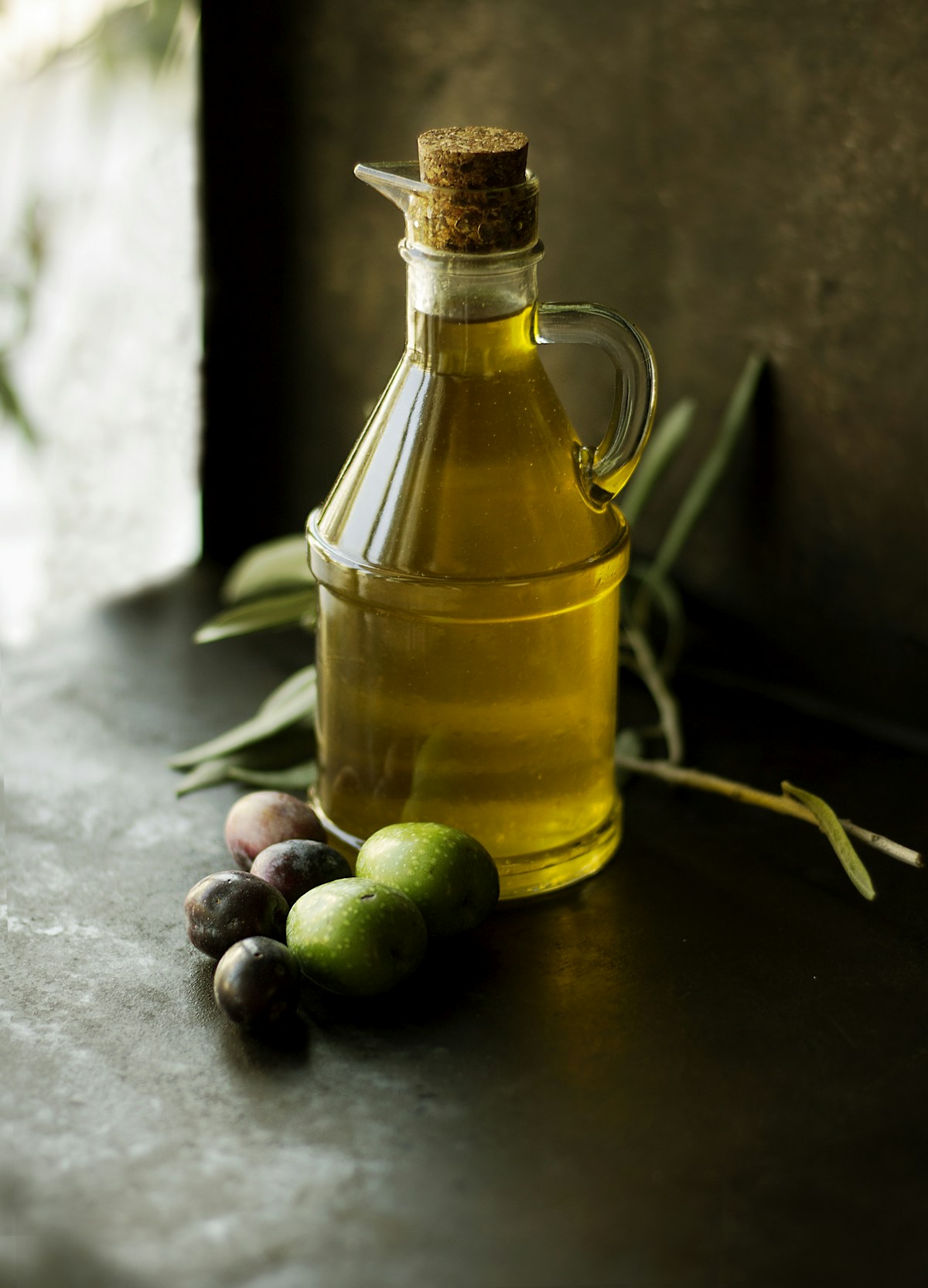
“Refined olive oil” and “pure olive oil” don’t qualify — only extra-virgin has substantial polyphenols. Look for darker color and pronounced aroma.
3. Rice bran oil — has a real basis
Unique bioactives
- γ-oryzanol: 1.65g per 100g of rice bran oil — essentially absent from other oils
- Tocotrienols: a form of vitamin E with ~50× the antioxidant capacity of α-tocopherol
- Phytosterols: inhibit cholesterol absorption
Cholesterol improvement — RCT meta-analysis (*Nutrients* 2025)
| Marker | Change |
|---|---|
| Total cholesterol | −11.8 mg/dL |
| LDL cholesterol | −15.1 mg/dL |
| Triglycerides | −15.1 mg/dL |
| HDL | No change |
Mechanism: γ-oryzanol + tocotrienols inhibit HMG-CoA reductase (the same target as statins — though far weaker).
Head-to-head with olive oil: essentially equivalent
- 143 Chinese adults with borderline hypercholesterolemia, 8 weeks: no significant difference
- T2DM glycemic control comparison: no significant difference
Honest limitations
- No large long-term RCT yet looking at CV events or mortality — only intermediate cholesterol markers
- So “cholesterol markers improve reliably; whether that translates to fewer heart attacks the way olive oil does is not as directly proven”
Other advantages
- High oxidative stability (smoke point ~230°C — great for frying and stir-frying)
- Very low trans fat
- Mild flavor — works well in Japanese cooking
4. Salad oil (the generic Japanese product)
Reality: Most “salad oil” in Japan is a soybean + canola (rapeseed) blend (mix varies by brand).
Positives
- Linoleic acid (ω-6) lowers LDL
- Clear positive when replacing saturated fat (butter, lard)
Negatives
- Excess ω-6: Japanese already consume 3–4× the requirement
- Distorts ω-6/ω-3 ratio → potential rise in inflammation markers
- Heat and repeated use generate lipid peroxides (reusing frying oil is a real concern)
- No unique bioactives like γ-oryzanol or polyphenols
Verdict
Not a “bad oil,” but not “healthy” either. A priority candidate for replacement.
5. “Rice bran oil vs salad oil” — choosing rice bran oil is scientifically correct
Reasons:
1. Unique bioactives (γ-oryzanol, tocotrienols) that salad oil lacks
2. Cholesterol improvement is meta-analysis proven
3. Oxidative stability beats salad oil for frying
4. Lower trans fat
5. Better culinary fit for Japanese cooking
But “rice bran oil beats olive oil” is not supportable — olive oil has overwhelmingly stronger hard-endpoint evidence.
6. The optimal home setup — use two oils
Don’t pick one. Match the oil to the job:
| Use | Recommended | Why |
|---|---|---|
| Salads, drizzling, finishing pasta and bread | Extra-virgin olive oil | Consume polyphenols before heat destroys them |
| Stir-frying, deep-frying, tempura | Rice bran oil (or high-oleic safflower) | 230°C smoke point, oxidatively stable |
| Generic salad oil | Replace it | At the same price, rice bran oil wins on nearly every metric |
7. evidage 4-axis scoring
For each oil in the 4-axis weighted scoring:
| Oil | Effect size | Evidence certainty | Ease | Cost | Total |
|---|---|---|---|---|---|
| Extra-virgin olive oil | 8 | 9 | 8 | 6 | 7.85 |
| Rice bran oil | 7 | 7 | 9 | 7 | 7.30 |
| Salad oil | 5 | 6 | 10 | 9 | 6.40 |
→ Olive oil is already embedded as a core component of the Mediterranean diet (#4) in the Latest Top 10.
8. Summary
- Extra-virgin olive oil is the only oil with Level 1 evidence down to hard endpoints (CV events, mortality)
- Rice bran oil has unique bioactives (γ-oryzanol, tocotrienols) with proven cholesterol improvement and high oxidative stability. Clearly better than salad oil
- Salad oil isn’t “bad,” but it isn’t notably healthy either. Priority candidate for replacement
- Use two oils: olive oil for raw/finishing, rice bran oil for heat
⚠️ Disclaimer
This article is not medical advice. If you’re being treated for dyslipidemia or following a specific dietary protocol, follow your physician’s or dietitian’s guidance.
📚 Related pages
- Mediterranean Diet — The Most Robustly Evidenced Eating Pattern
- Monthly Top 10
- Evaluation Method — evidage’s 4-axis weighted scoring framework
- Evidence Basics
References
- Estruch R et al. *NEJM* 2013; “Primary Prevention of Cardiovascular Disease with a Mediterranean Diet (PREDIMED)”
- Guasch-Ferré M et al. *PMC* 2014; “Olive oil intake and risk of cardiovascular disease and mortality in the PREDIMED Study”
- Martínez-González MA et al. *Clinical Nutrition* 2022; “Effect of olive oil consumption on CVD, cancer, T2D, and all-cause mortality: meta-analysis”
- Lin J et al. *Nutrients* 2025; “Rice Bran Consumption Improves Lipid Profiles: Systematic Review and Meta-Analysis of RCTs”
- Bumrungpert A et al. 2019; “Rice Bran Oil Containing γ-Oryzanol Improves Lipid Profiles”