[Level 1 (Strongest)] [Diet] [Strongly recommended]
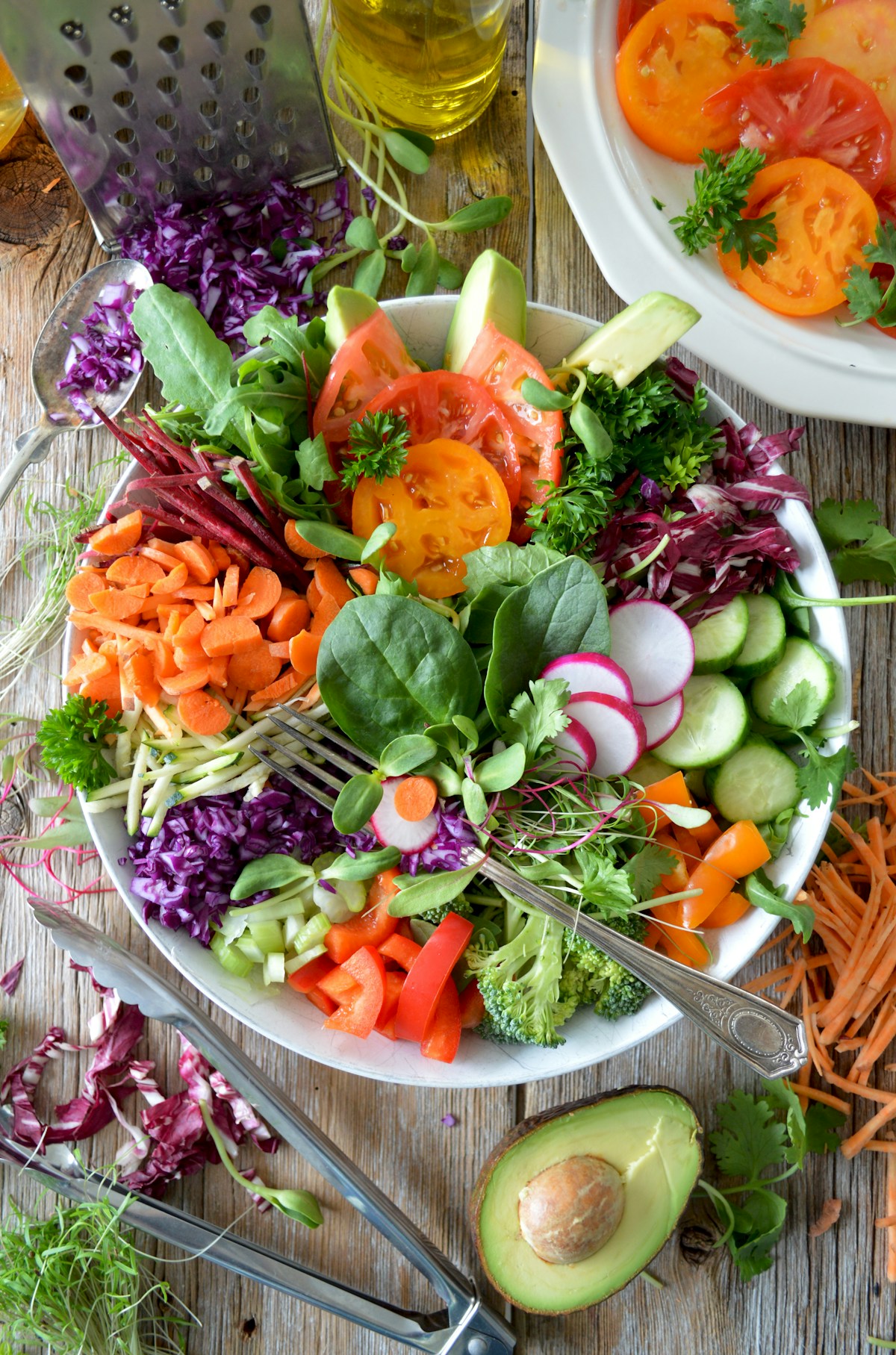
“Dark green and yellow vegetables are good for you, but cabbage, lettuce, and bean sprouts are nutritionally thin — eating them barely counts.” Have you heard this? Half of it is right; the other half is clearly wrong. Here we lay out what nutritional epidemiology actually says about both groups.
💡 Bottom line first: Yes, nutrient-dense dark vegetables — especially leafy greens — have strong evidence for cognitive and cardiovascular protection. But “light-colored” vegetables (especially the cruciferous family — cabbage, broccoli, kale relatives) have independent, strong evidence of their own. The smartest target is total intake of ≥350g/day, not “only dark vegetables.”
1. Why dark vegetables get special treatment
Japan’s MHLW classifies vegetables containing ≥600μg carotene per 100g as “green and yellow” (緑黄色野菜). Examples: spinach, carrots, tomatoes, pumpkin, broccoli, komatsuna, peppers.
Strong evidence base:
| Effect | Reference |
|---|---|
| One serving/day of green leafy vegetables → cognitive aging delayed by ~11 years | Morris et al., *Neurology* 2018 (Rush Memory and Aging Project, n=960) |
| Coronary heart disease risk reduction (evidence certainty: “moderate”) | Aune et al., *International Journal of Epidemiology* 2017 |
| MIND diet adherence linked to lower Alzheimer’s risk | Morris et al., *Alzheimer’s & Dementia* 2015 |
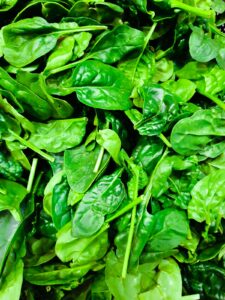
Key bioactives: β-carotene, vitamin K, folate, lutein, multiple antioxidants. So “dark vegetables are in a class of their own” is true.
2. But “light-colored vegetables are useless” is plainly wrong
Cabbage — Classified as “light-colored” but cruciferous and elite
Cabbage is classified as “light-colored” in Japan’s system, but as a cruciferous vegetable it has an entirely separate, strong evidence base:
- 100g/day cruciferous intake → all-cause mortality −10–12%, cardiovascular mortality −22–31% (Wu et al., 2018 meta-analysis)
- The Japan Public Health Center-based study (n=88,184, 16.9-year follow-up): higher cruciferous intake → lower all-cause mortality
- Isothiocyanates (sulforaphane) have strong evidence for stomach and colorectal cancer prevention
- Same family: broccoli, cauliflower, daikon, Chinese cabbage, komatsuna
“Cabbage doesn’t count because it isn’t dark” flatly contradicts the literature.
Lettuce — The variety matters more than the family label
This is where the “light isn’t worth eating” argument has partial traction:
- Iceberg lettuce has about 1/9 the vitamin A of romaine
- High water content, modest nutrient density per gram
But “useless” is too strong:
- Provides fiber, vitamin K, folate, and water content
- Low-calorie, contributes to satiety and total food volume
- Romaine, leaf lettuce, and red leaf varieties are classified as dark vegetables — color density itself is the marker
Bean sprouts — “Nutritionally empty” is a misconception
- Contains vitamin C, folate, fiber, potassium, and aspartic acid
- The germination process generates nutrients absent from the original seed — a unique vegetable
- Soybean sprouts add soy isoflavones, soy saponins, and soy protein (functional food despite being “light-colored”)
- Per-calorie nutrient density is actually high
3. The most important lens — “total intake” beats classification
The strongest evidence for vegetables’ health benefits is not about which color, but about how much.
PURE study (*Lancet* 2017, 18 countries, ~130,000 people)
- 3–4 servings/day (375–500g) of vegetables, fruit, and legumes combined → maximal mortality reduction
- No additional benefit beyond that, but linear risk increase below it
Aune et al. meta-analysis (*BMJ* 2017)
- Up to 800g/day of fruit + vegetables → linear dose-response with reduced all-cause mortality
- Each 200g/day increase → −10% all-cause mortality
UK Biobank (n=400,000)
- Raw vegetable intake linked to reduced cardiovascular risk
So “120g of dark vegetables and call it done” is vastly inferior to “120g dark + 230g light = 350g+ total.” Light vegetables play the role of “filling out the volume” — cut them out and you can’t hit the 350g/day MHLW target.
4. Practical priority order
Given the evidence, a realistic priority list:
| Priority | Recommendation |
|---|---|
| 🥇 First | Hit the 350g/day total (any vegetable counts) |
| 🥈 Then | Dark leafy greens 5+ times per week (spinach, komatsuna, romaine) |
| 🥉 Parallel | Cruciferous 3+ times per week (cabbage, broccoli, etc.) |
| Supplemental | Use light-colored vegetables freely to bulk out total volume |
The one clearly improvable choice: pick romaine or leaf lettuce over iceberg.
5. evidage 4-axis scoring
For “Vegetables (350g/day total)” in evidage’s 4-axis weighted scoring:
| Axis | Rating | Weighted |
|---|---|---|
| Effect size 35% | 8 (all-cause mortality −15–25%) | 2.80 |
| Evidence certainty 30% | 9 (multiple large cohorts + meta-analyses) | 2.70 |
| Ease of implementation 20% | 7 (350g doable with conscious effort) | 1.40 |
| Cost 15% | 7 (cheap when seasonal) | 1.05 |
| Total | 7.95 |
→ This is already embedded as the core of “Mediterranean diet” (#4) in the Latest Top 10.
6. Summary
- Dark vegetables are genuinely nutrient-dense, and leafy greens in particular have strong evidence for cognitive protection
- “Light-colored vegetables are useless” is plainly wrong: cabbage in particular, as a cruciferous vegetable, has all-cause mortality reduction of 10–12%
- The strongest evidence is for total intake: aim for 350g/day, ideally up to 500g
- Pick romaine or leaf lettuce over iceberg (color density matters)
- “Total volume” beats “color classification” — that’s the modern epidemiology consensus
⚠️ Disclaimer
This article is not medical advice. People with reduced kidney function (potassium restriction needed) or those on a controlled diet for diabetes should follow physician/dietitian guidance.
📚 Related pages
- Monthly Top 10
- Mediterranean Diet — The Most Robustly Evidenced Eating Pattern
- Evaluation Method — evidage’s 4-axis weighted scoring framework
- Evidence Basics
References
- Morris MC et al. *Neurology* 2018; “Nutrients and bioactives in green leafy vegetables and cognitive decline”
- Aune D et al. *International Journal of Epidemiology* 2017; “Fruit and vegetable intake and the risk of cardiovascular disease, total cancer and all-cause mortality”
- Miller V et al. *Lancet* 2017; “Fruit, vegetable, and legume intake, and cardiovascular disease and deaths in 18 countries (PURE)”
- Wu QJ et al. 2018; “Cruciferous vegetable intake and mortality” meta-analysis
- JPHC Study (Japan National Cancer Center, Multi-purpose Cohort)
- Japan MHLW, “Dietary Reference Intakes (2020)” and “Health Japan 21 (2nd term)”