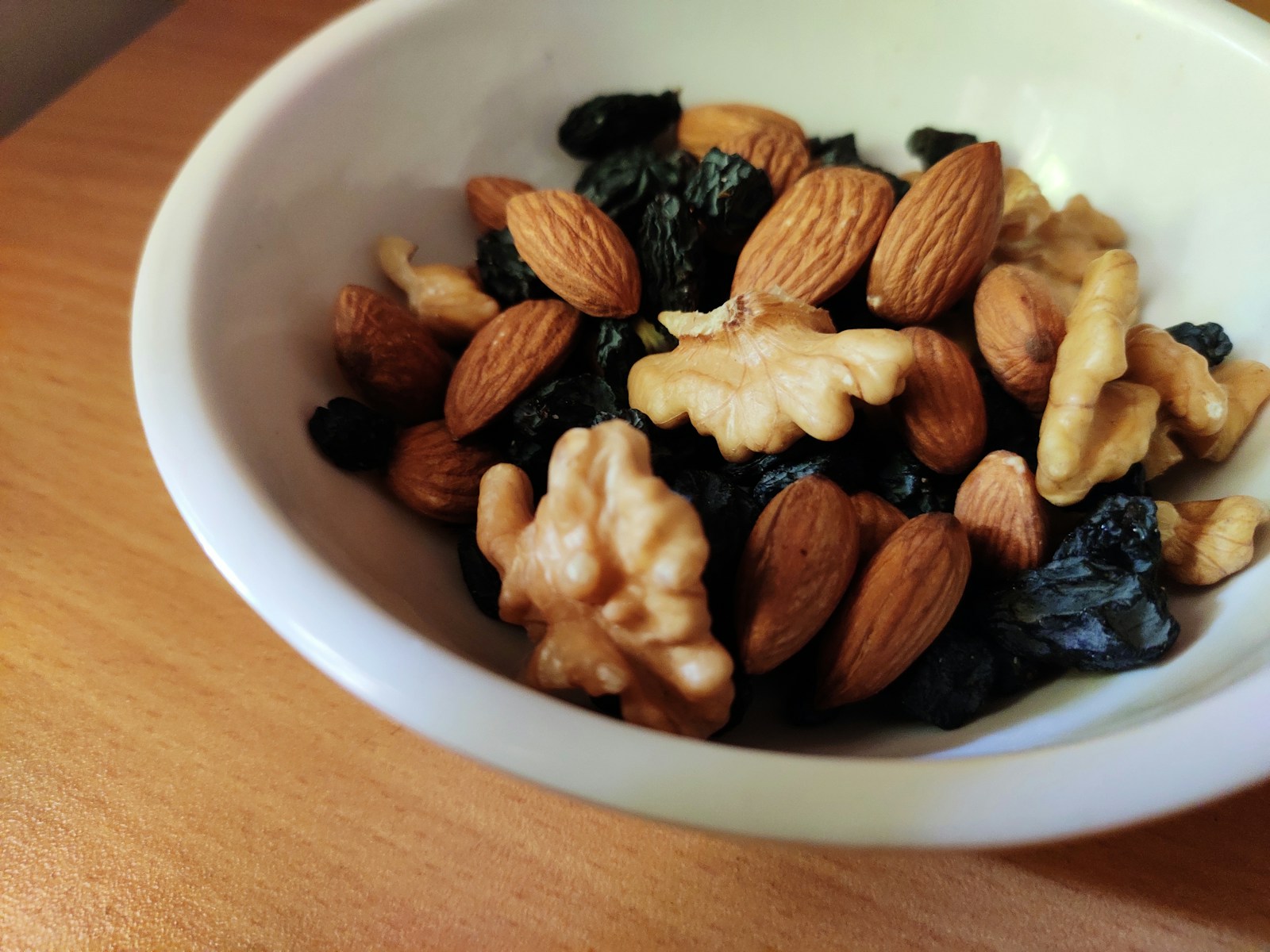
If you reach for sweets when hunger hits in the afternoon, nuts deserve a second look. We pull together the RCT and cohort evidence on cardiovascular risk, cognition, and weight — and explain why the “too high in calories” objection turns out to be largely wrong.
Conclusion: Nuts are among the most powerful foods available, significantly reducing the risk of all-cause mortality and cardiovascular disease when consumed in amounts of 30 grams (a handful) per day.
[Level 1 (Strongest)] [Diet & Nutrition] [Strongly recommended]
Nuts (such as almonds, walnuts, pistachios, and peanuts) are among the few foods for which multiple RCTs and meta-analyses—including the PREDIMED trial—have consistently demonstrated a reduction in mortality. A daily intake of 30 grams (about a handful) is associated with a 22% reduction in all-cause mortality, a 27% reduction in cardiovascular disease mortality, and an 11% reduction in cancer mortality.
📊 Effect Sizes and Key Studies
- Estruch et al., NEJM 2018 (PREDIMED reanalysis): 28% reduction in major cardiovascular events in the Mediterranean diet plus nuts group. Contributed by MUFAs and alpha-linolenic acid.
- Bao et al., NEJM 2013: Nurses’ Health Study and Physicians’ Health Study, total of 120,000 participants, 30-year follow-up. Daily intake of 30 g of nuts was associated with a 20% reduction in all-cause mortality, a 29% reduction in cardiovascular disease mortality, and an 11% reduction in cancer mortality.
- Aune et al., BMC Medicine 2016: Meta-analysis of 29 studies, 819,000 participants. A daily intake of 28 g was associated with a 29% reduction in coronary heart disease and a 22% reduction in all-cause mortality.
- Liu et al., JACC 2019: Physicians’ Health Study (peanuts). Peanuts also reduce cardiovascular risk to the same extent as tree nuts.
💡 The Bottom Line
Nuts are a concentrated source of healthy fats (monounsaturated fatty acids and alpha-linolenic acid), dietary fiber, vitamin E, magnesium, and plant sterols. Consuming 30 grams (175 kcal) per day can simultaneously improve endothelial function, lower LDL cholesterol, and reduce inflammation.
🎯 How to Start
Aim for about 30g per day (equivalent to one small rice ball):
- Choose unsalted, plain-roasted varieties. Avoid salted or oil-coated products.
- Adding them to your breakfast yogurt, sprinkling them on a salad, or eating them as a snack makes it easier to stick with the habit.
- A mix of almonds, walnuts, and pistachios offers the best nutritional balance.
- Peanuts are technically legumes, but they offer similar health benefits and are a good value.
⚠️ Cautions
1. High in calories (about 175 kcal per 30 g): Overeating can lead to weight gain.
2. Nut allergies: Peanut allergies can sometimes be life-threatening.
3. Salted, caramelized, and chocolate-coated varieties are a different story: They are high in salt and sugar, which negates any health benefits.
📝 Summary
- Nuts consistently show a reduced risk of all-cause mortality and cardiovascular disease in RCTs and large-scale cohort studies (Level 1)
- 30 g (a handful) per day is the ideal amount
- Choose unsalted and roasted
- One of the core foods of the Mediterranean diet
📚 References
- Estruch R, et al. N Engl J Med. 2018;378(25):e34.
- Bao Y, et al. N Engl J Med. 2013;369(21):2001-2011.
- Aune D, et al. BMC Med. 2016;14(1):207.
- Liu G, et al. J Am Coll Cardiol. 2019;74(15):1855-1864.
⚠️ Disclaimer
- This page is based on peer-reviewed scientific research, but it is not a substitute for medical care
- Please consult a doctor or registered dietitian regarding individual health decisions.