If you love fried food, this one’s for you. We look at how frequency of consumption maps onto cardiovascular disease, type 2 diabetes, and all-cause mortality in cohort studies — and whether “restaurant fried” and “home fried” really differ.
Conclusion: Fried foods and French fries increase the risk of cardiovascular disease and all-cause mortality; consuming them three or more times a week has a clear adverse effect.
[Level 2 (Strong)] [Diet & Nutrition] [Strongly recommend limiting intake]
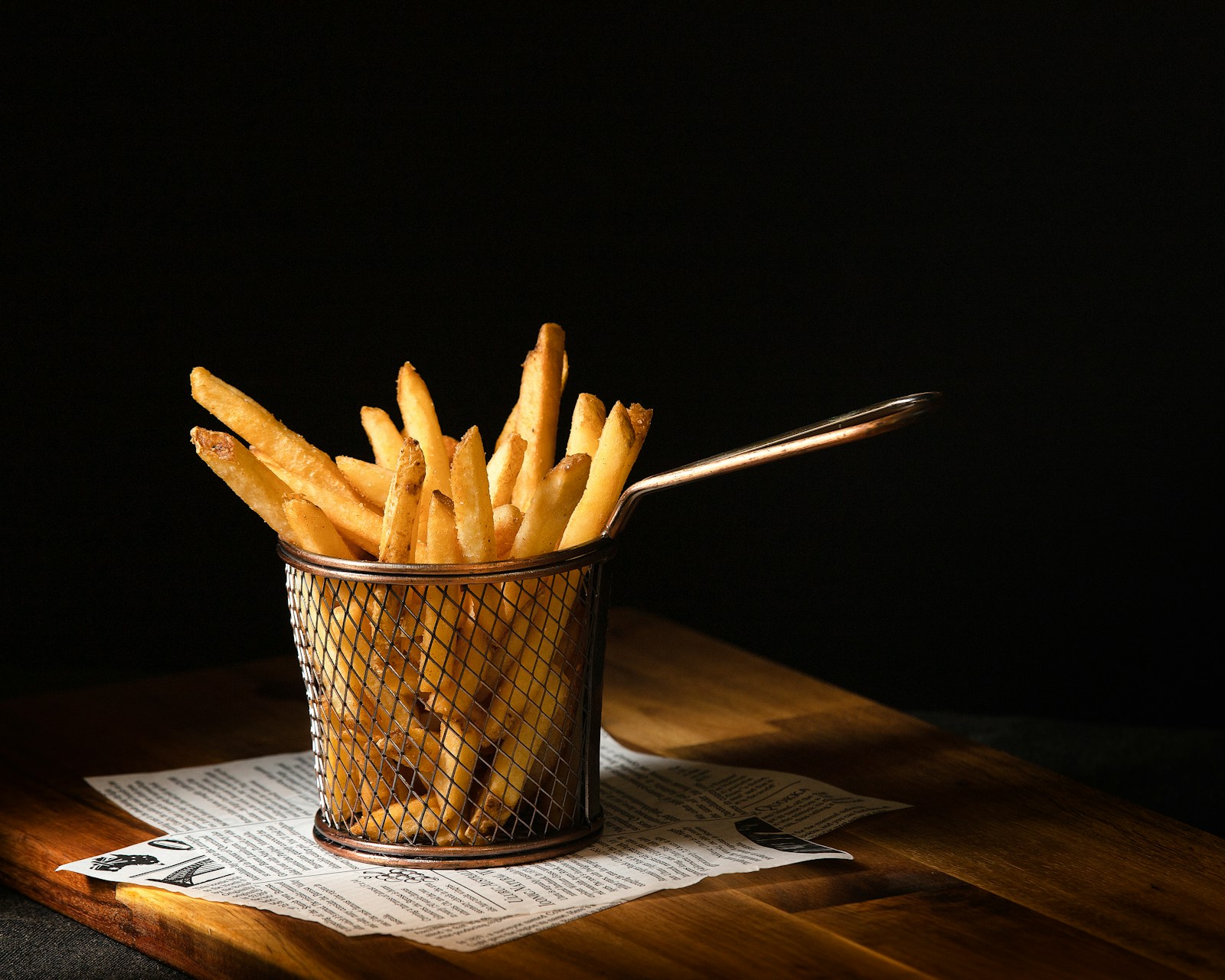
Meta-analyses show that consuming fried foods (such as French fries, tempura, fried chicken, and croquettes) three or more times a week is associated with an increased risk of cardiovascular disease and all-cause mortality. This is due to the combined adverse effects of oxidation products from repeatedly heated oil, AGEs (advanced glycation end products), and acrylamide. Eating out and consuming fast food is far worse than frying at home (due to the reuse of oil).
📊 Effect Sizes and Key Studies
- Qin et al., BMJ 2021: Meta-analysis of 19 cohorts involving approximately 750,000 participants. Each additional serving of fried foods per week was associated with a 3% increase in the risk of cardiovascular disease, a 12% increase in heart failure, and a 2% increase in myocardial infarction. The risk increased significantly with three or more servings per week.
- Cahill et al., BMJ 2014: Nurses’ Health Study and Physicians’ Health Study. Eating French fries three or more times per week was associated with a 21% increased risk of type 2 diabetes.
- Veronese et al., Am J Clin Nutr 2017: 4,440 older adults, 8-year follow-up. Eating French fries twice or more per week doubled the risk of death (observational study, unadjusted).
- Uribarri et al., J Acad Nutr Diet 2010: Measurement of AGEs in foods. Fried foods and grilled meat are the food groups with the highest AGE content. AGEs are associated with vascular and renal aging.
💡 The Bottom Line
1. Oxidation of oil from repeated heating: Formation of trans fats, acrolein, and other compounds.
2. AGEs (Advanced Glycation End-products): Produced in large quantities during high-temperature cooking, accelerating the aging of blood vessels and kidneys.
3. Acrylamide: Found in high concentrations in fried potatoes (IARC Group 2A).
4. High calorie content: Oil absorption results in meals exceeding 600–1,000 kcal.
5. Excessive salt intake: Salt is added during seasoning.
🎯 How to Start
Aim for no more than once a week, and choose your cooking methods carefully:
- Prioritize reducing fried foods and french fries when eating out (reusing oil is particularly bad).
- Home cooking: Change oil frequently, and cook at low temperatures (160–170°C) for short periods.
- Alternative cooking methods: Baking, air frying, steaming, grilling. Replace French fries with oven-baked potatoes.
- "Craving for fried foods": The amount of oil absorbed increases in the following order: plain fried → Tatsuta-age → Karaage → Tempura → deep-fried (with heavy batter). Limit yourself to Tatsuta-age or similar.
⚠️ Cautions
1. Fried foods at fast-food restaurants are particularly bad: They reuse oil far more frequently than other places.
2. Air fryers aren’t perfect either: Since acrylamide forms at high temperatures, be careful not to overcook food.
3. “It’s vegetable oil, so it’s safe” is a misconception: Repeated heating causes vegetable oils to produce trans fats as well.
4. White-coated fried foods (such as the white skin on fried chicken) produce relatively few AGEs, while the darker and browner the food, the more AGEs it contains.
📝 Summary
- Eating fried foods three or more times a week increases the risk of cardiovascular disease and all-cause mortality (Level 2)
- Fried foods from restaurants and fast-food chains are particularly harmful
- Limit to once a week or less; prioritize home-cooked meals
- Switching to oven-baked or air-fried foods is effective
📚 References
- Qin P, et al. BMJ. 2021;370:m2519.
- Cahill LE, et al. BMJ. 2014;348:g3437.
- Veronese N, et al. Am J Clin Nutr. 2017;106(1):162-167.
- Uribarri J, et al. J Acad Nutr Diet. 2010;110(6):911-916.
⚠️ Disclaimer
- This page is based on peer-reviewed scientific research, but it is not a substitute for medical care
- Please consult a doctor or registered dietitian regarding individual health decisions.