Are Fermented Foods and Miso Soup Really Good for You? Weighing “Fermentation Benefits” Against “Salt Harms” [2026 Evidence Review]
[Level 2–3 (Moderate)] [Food & Nutrition] [Series: Health for Serious Middle-Agers]
⚠️ Before You Read
This article is educational information based on peer-reviewed studies (mostly observational, with a few RCTs) on fermented foods and miso/miso soup. It is not a substitute for medical advice, diagnosis, or treatment. If you have a history of hypertension or gastric cancer, are H. pylori–positive, or have reduced kidney function, consult your physician about salt intake. No specific food is guaranteed to “cure” or “prevent” disease.
Key Points (3-line summary)
- “Fermented foods are good for you” is partly true but too broad to be scientifically accurate. Effects differ greatly by food type, and direct RCT evidence is scarce and small.
- Miso soup contains both an upside (fermented soy) and a downside (salt). On gastric cancer, studies flatly contradict one another.
- Bottom line: one bowl a day, low-salt, packed with vegetables is neutral-to-slightly-beneficial for healthy people. Three or more bowls a day, or a salty version, is unfavorable due to excess sodium. Potassium-rich ingredients and good dashi stock reduce the downside.
1. Are Fermented Foods “Good for You” in General?
The strongest evidence: Stanford’s intervention trial
The most-cited direct evidence linking fermented foods to health is a 10-week randomized controlled trial by Wastyk, Gardner, and Sonnenburg at Stanford (Cell, 2021). Among 36 healthy adults split into a “more fermented foods” group and a “more fiber” group, only the fermented-foods group showed increased gut microbial diversity and a decrease in 19 inflammatory proteins, including IL-6. The fiber group did not.
This is a valuable intervention study, but with N=36, only 10 weeks, and a single site, it did not assess long-term outcomes such as death or disease. It is worth being honest that the “strongest” evidence for fermented foods is, in fact, this modest in scale.
In observational studies, the picture splits by food type
Large observational studies show clear patterns once you stop lumping fermented foods together:
- Yogurt: Dose-response meta-analyses report ~200 g/day linked to all-cause mortality HR ~0.89, CVD death HR ~0.89, and ~27% lower type-2 diabetes risk.
- Fermented dairy (cheese, yogurt): Cohort meta-analyses link them to lower CVD risk (cheese OR ~0.87, yogurt ~0.78).
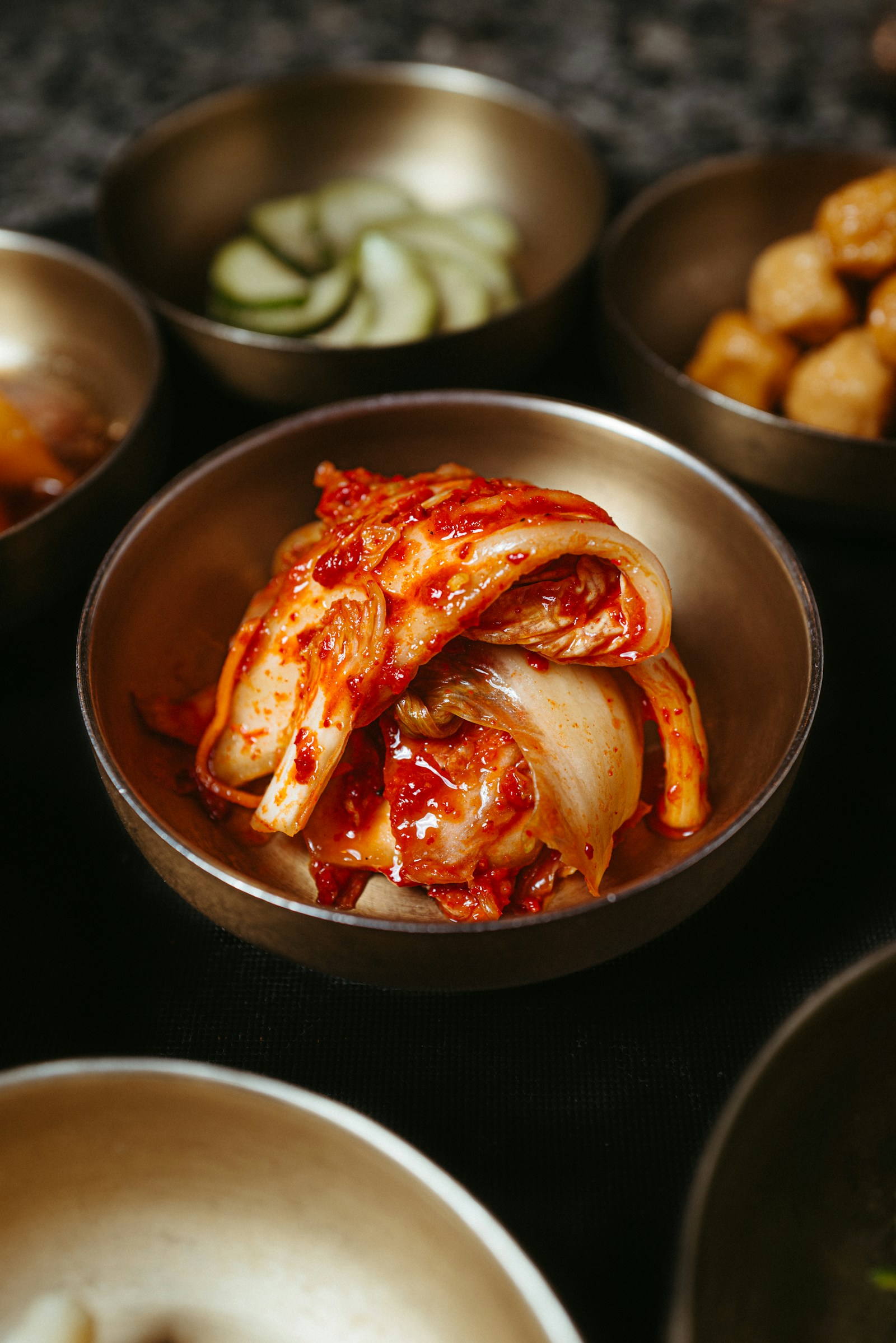
- Kimchi: Small trials show mild reductions in fasting glucose and blood pressure — but kimchi is also a high-salt food, so overconsumption cuts both ways with sodium and gastric-cancer risk.
- Miso and bread: A 2026 meta-analysis of 50 cohorts and over 3 million people (Frontiers in Nutrition, 2026) found cheese and fermented dairy linked to lower mortality, while miso and bread showed no significant association with death — neither clearly beneficial nor harmful.
So “fermented food” as a single category is inaccurate. Dairy and fermented soy look relatively favorable; high-salt fermented foods are double-edged. And observational studies carry residual confounding — people who eat lots of fermented foods tend to be more health-conscious — so causation is not established.
2. The Evidence on Miso Itself
Fermented soy (miso, natto) and mortality/cardiovascular disease
Large Japanese cohorts contain data favorable to fermented soy:
- JPHC study (Katagiri, Tsugane et al., BMJ 2020): ~90,000 people followed ~15 years. High intake of fermented soy (natto, miso) was linked to ~10% lower all-cause mortality. Non-fermented total soy showed no significant difference, and the authors note the effect may be driven mainly by natto.
- Takayama study (Nagata et al., Am J Clin Nutr 2017): ~29,000 people over 16 years. Highest natto intake linked to CVD death HR 0.75 and stroke death HR 0.68. Nattokinase (a fibrinolytic enzyme) draws attention.
- Isoflavones and cardiovascular disease (Kokubo, Tsugane et al., Circulation 2007): Postmenopausal women with high isoflavone intake had much lower stroke/MI risk, but no significant effect in men — a large sex difference to keep in mind.
These suggest a benefit from fermented soy, but the main actors appear to be natto and isoflavones rather than miso alone, and the studies are observational.
The biggest issue: miso and gastric cancer (studies contradict)
The relationship between miso soup and gastric cancer is genuinely contradictory across the literature and deserves caution.
- Classic report (Hirayama, 1980s): In a large Japanese cohort, daily miso-soup drinkers actually had lower gastric-cancer death (relative risk ~0.74) — the origin of the “miso prevents gastric cancer” idea.
- Later cohorts (JPHC, JACC, etc.): Conversely, several report higher gastric-cancer risk with daily/heavy miso-soup intake (e.g., raised odds ratios with daily intake; ~60% higher with ≥3 bowls/day).
- Takayama (Nagata et al., Br J Cancer 2002): High soy intake linked to lower gastric-cancer death in men (HR 0.50) — protective direction.
Why the opposite results? The most coherent reading is that protective components (soy isoflavones) and salt’s carcinogenic promotion compete, so the sign flips with dose. Small amounts (about one bowl/day) are neutral-to-slightly-protective; large amounts (≥3 bowls/day) let salt’s harm win, raising risk. It is not as simple as “miso cancels salt’s harm.”
Miso and blood pressure: less pressor than its salt would suggest?
Intriguingly, some studies suggest miso’s salt raises blood pressure less than the same amount of table salt:
- Kondo et al., Hypertens Res 2019: In people with high-normal to mild hypertension, 8 weeks of miso soup did not raise daytime blood pressure and even lowered nighttime pressure.
- In Dahl salt-sensitive rats, the same salt load produced smaller blood-pressure rises in the miso group.
- Some cross-sectional studies found no clear link between habitual miso-soup intake and blood pressure or heart rate.
Melanoidins, soy peptides, and γ-polyglutamic acid in miso are hypothesized to blunt salt’s pressor effect. But these are small, cross-sectional, or animal studies, and no RCT has tested long-term cardiovascular outcomes of miso soup. Do not over-trust the “salt paradox.”
3. The Harms of Salt Are Well Established
Any evaluation of miso soup must start from the premise that salt’s harms are established:
- Gastric cancer: High-salt diets raise gastric-cancer risk ~1.5–1.7× (D’Elia et al., Clin Nutr 2012, and other meta-analyses), with a stronger link in Japanese populations.
- Stroke/cardiovascular: High salt raises stroke risk ~20%.
- Potassium salt-substitution RCT (SSaSS, NEJM 2021, N≈20,000): Substituting some sodium with potassium reduced stroke −14%, major cardiovascular events −13%, all-cause death −12%. Cutting sodium and raising potassium improved hard outcomes.
- Sodium/potassium ratio: Not just absolute salt, but balance with potassium (Na/K ratio) relates to mortality and cardiovascular risk.
Average Japanese salt intake is ~10 g/day (WHO recommends under 5 g; the Japanese Society of Hypertension targets 6 g). Clearly “too much.” And one bowl of miso soup contains ~1.2–1.5 g of salt — about 20% of a 6 g/day target.
4. Verdict: Should You Add Miso Soup to Your Meal?
The trade-off
Miso soup contains both an upside (potential cardiovascular/blood-pressure benefits from fermented soy — isoflavones, peptides, melanoidins) and a downside (a 1.2–1.5 g salt source per bowl). Which wins depends on amount and preparation.
You can reduce the salt harm with ingredients and dashi
- Load it with vegetables: Potassium-rich ingredients (wakame, vegetables, potatoes) improve the Na/K ratio and partly offset salt’s harm (a reasonable inference from SSaSS and Na/K evidence).
- Use strong dashi: Umami from kombu, bonito, or dried sardines lets you use less miso (= less salt).
- Use reduced-salt miso, leave some broth, control concentration: the most reliable practical steps.
No RCT has directly shown that “adding potassium via ingredients fully cancels salt’s harm,” so treat this as reducing, not eliminating, the downside.
Evidence-based conditional answer
About one bowl/day, low-salt, vegetable-packed miso soup is neutral-to-slightly-beneficial for healthy people, as the potential benefits of fermented soy roughly offset the sodium downside. Habitual intake of ≥3 bowls/day or a salty version becomes excess sodium and is unfavorable for hypertension and gastric cancer. People with hypertension, a history of gastric cancer, H. pylori positivity, or high salt sensitivity should prioritize managing bowl count and salt.
For Japanese people, miso soup is a reasonable component of a Mediterranean-Japanese hybrid diet (miso soup, natto, oily fish, simmered vegetables + olive oil) — as long as you keep the amount in check. Miso soup is neither an enemy nor a cure-all; what matters is whether it fits within your total sodium budget.
5. FAQ
Q1. How many bowls a day is reasonable? A. No RCT defines a clear threshold, but based on observational trends and salt content, up to 1–2 bowls/day, low-salt and vegetable-rich is sensible. Habitual ≥3 bowls tends toward excess sodium.
Q2. Can I drink as much reduced-salt miso soup as I like? A. Reduced-salt miso is not salt-free; more bowls means more total salt. Combine “reduced-salt miso + plenty of vegetables + dashi” to lower per-bowl salt while managing the total.
Q3. Is any fermented food good for me? A. No. Effects vary by type. Yogurt, cheese, and natto have relatively favorable data, but high-salt fermented foods like kimchi and miso are a tug-of-war between fermentation benefits and salt harms.
Q4. Does miso soup raise blood pressure? A. Small studies suggest miso’s salt may raise pressure less than table salt, but this is not settled. If you already have hypertension, manage miso soup as a salt source too.
Q5. Does miso soup prevent or cause gastric cancer? A. Studies conflict. The most coherent reading: neutral-to-slightly-protective in small amounts, higher risk in large amounts due to salt. Because H. pylori infection dominates gastric-cancer risk, testing for and eradicating H. pylori matters more.
6. Summary
- “Fermented foods are healthy” depends on the type. Direct intervention evidence centers on one small Stanford RCT; most data are observational.
- Miso has data suggesting cardiovascular/blood-pressure benefits, but gastric-cancer findings conflict. The key is amount.
- Salt’s harm is established. Japanese people eat too much (~10 g/day). One bowl of miso soup ≈ 1.2–1.5 g salt.
- Answer: one bowl/day, low-salt, vegetable-packed = neutral-to-slightly-beneficial; ≥3 bowls or salty = unfavorable. Potassium-rich ingredients and dashi reduce the downside. What matters is fitting miso soup within total sodium management.
References
- Wastyk HC, Gardner CD, Sonnenburg JL, et al. (2021). Gut-microbiota-targeted diets modulate human immune status. Cell 184(16):4137-4153. PMID: 34256014
- Katagiri R, Tsugane S, et al. (2020). Association of soy and fermented soy product intake with total and cause-specific mortality (JPHC). BMJ 368:m34. PMID: 31996350
- Nagata C, et al. (2017). Dietary soy and natto intake and cardiovascular disease mortality (Takayama). Am J Clin Nutr. PMID: 27927636
- Kokubo Y, Tsugane S, et al. (2007). Dietary soy, beans, isoflavones and risk of cerebral and myocardial infarctions (JPHC). Circulation. PMID: 18025534
- Nagata C, et al. (2002). Soy product intake and stomach cancer death (Takayama). Br J Cancer. DOI: 10.1038/sj.bjc.6600349
- Kondo K, et al. (2019). Long-term intake of miso soup decreases nighttime blood pressure. Hypertens Res 42:1757-1767. DOI: 10.1038/s41440-019-0304-9
- D’Elia L, et al. (2012). Habitual salt intake and risk of gastric cancer: meta-analysis. Clin Nutr 31(4):489-98.
- Neal B, et al. (2021). Effect of Salt Substitution on Cardiovascular Events and Death (SSaSS). NEJM 385:1067-1077. DOI: 10.1056/NEJMoa2105675
- Meta-analysis (2026). Fermented foods consumption and mortality. Front Nutr. DOI: 10.3389/fnut.2026.1714437
Evidence as of September 2026. Some effect sizes/DOIs should be verified against the original papers; conflicting findings are noted in the text.