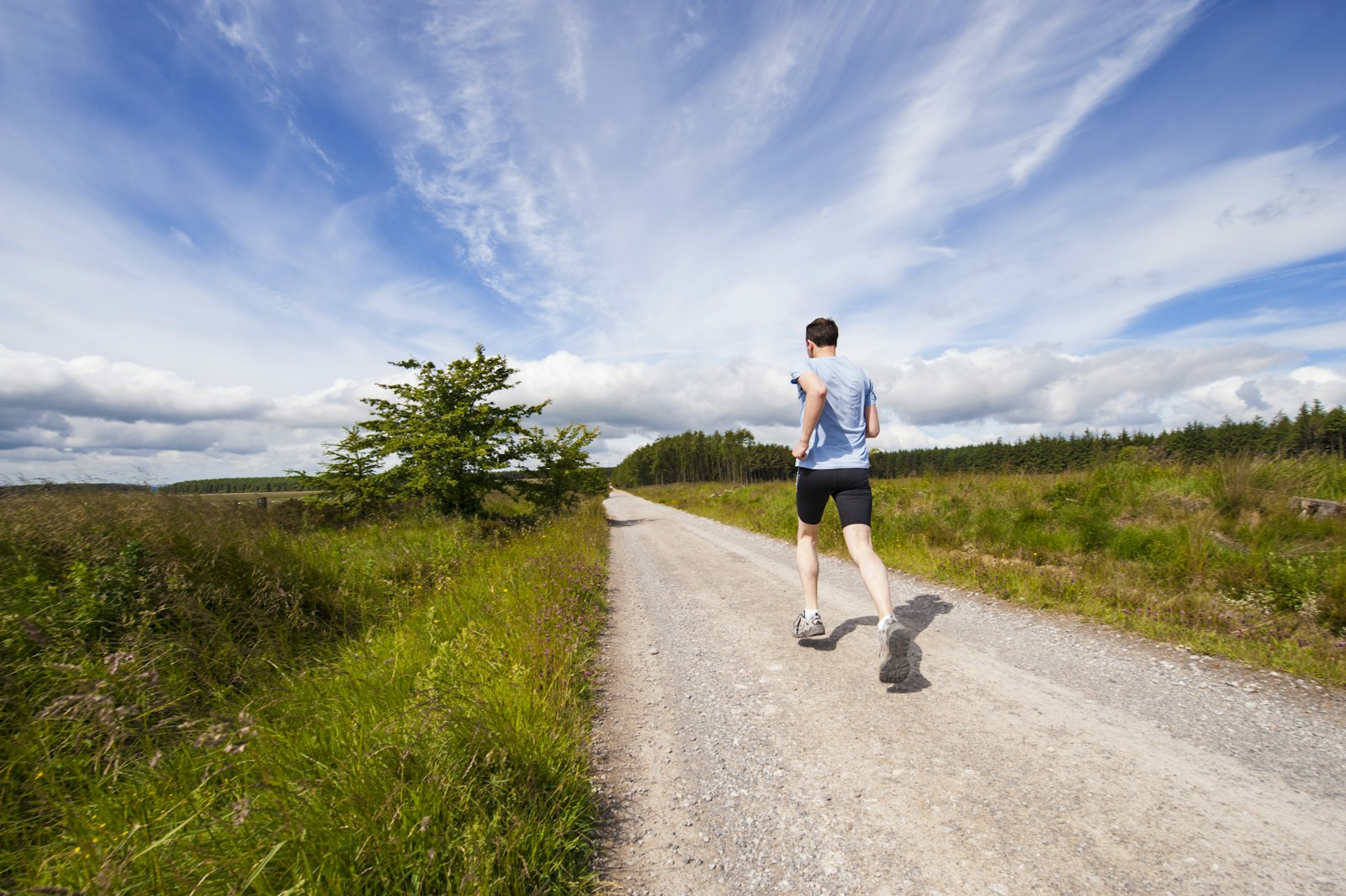
Of all the lifestyle interventions evaluated for healthspan, regular exercise has perhaps the most consistent Level 1 evidence. This overview summarizes what the research says about type, intensity, frequency, and minimum effective dose.
Conclusion: 150–300 min/week moderate aerobic + 2× strength = Level 1 recommendation
[Level 1 (Strongest)] [Lifestyle] [Strongly recommended]
The WHO and US Physical Activity Guidelines converge on a clear minimum: 150–300 minutes of moderate-intensity aerobic exercise per week, plus at least 2 sessions of strength training. Above this floor, every additional 60 minutes per week of moderate activity is associated with measurable reductions in all-cause mortality, cardiovascular disease, type 2 diabetes, and dementia risk.
🏃 Aerobic exercise
- Minimum effective dose: 150 min/week moderate intensity (e.g., brisk walking) or 75 min/week vigorous (e.g., running)
- Optimal range: 300–600 min/week — the dose-response curve flattens above this
- Effect sizes: ~30% lower all-cause mortality, ~25% lower cardiovascular death at 300 min/week (Arem 2015 meta-analysis, 661,000 participants)
💪 Strength training
- Minimum effective dose: 2 sessions per week, each covering major muscle groups
- Effect on lifespan: Independent of aerobic exercise, strength training is associated with 10–17% lower all-cause mortality (Saeidifard 2019)
- Critical above age 50 for preventing sarcopenia (muscle loss)
🫁 VO2 max — the single best biomarker
VO2 max (maximal oxygen uptake) is one of the strongest single predictors of all-cause mortality, more predictive than smoking, hypertension, or diabetes for many populations (Mandsager 2018, JAMA). Moving from “low” to “below average” fitness cuts mortality risk by ~50%.
🎯 Practical starting points
- Walk 30 minutes daily, 5 days/week
- Add 2 short strength sessions per week (20–30 min each)
- Once aerobic baseline is in place, add 1–2 vigorous interval sessions per week to raise VO2 max
- Make it sustainable: small consistent doses beat occasional intense sessions
